New documentary will offer medical evidence that miracles are real
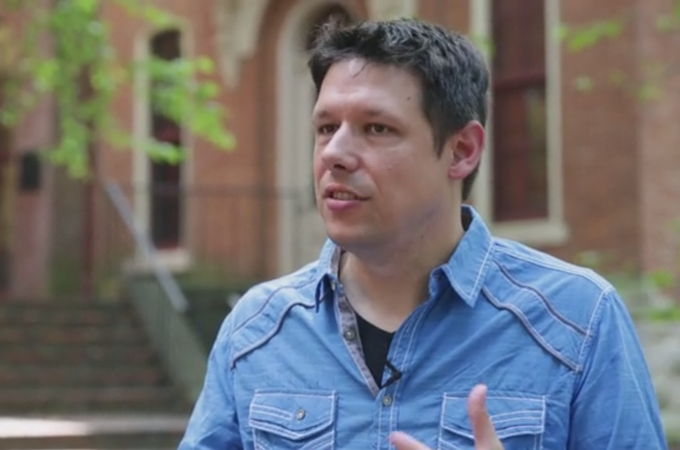
Filmmaker Elijah Stephens is planning to release within the next year a documentary that directly challenges skeptics who don't believe miracles are real with medical evidence, reports Christian Post.
Filmmaker Elijah Stephens plans "to thoughtfully engage intellectuals and medical professionals because these are individuals who deserve our respect." He adds that too often Christians steer clear of secular academics to support miracles, and laments that the "language of scientists and philosophers has not been used to show that God's miraculous power to heal is indeed real."
In addition to the people who have been healed miraculously and the skeptics, Stephens also probes some of the best scholars and miracle apologists alive today. Featured prominently in the trailer of this film is Indiana University's Dr. Candy Gunther Brown, who in 2010 travelled to Mozambique in pursuit of such evidence for miraculous healing in order to test the effects of prayer on the deaf and blind. After testing 24 Mozambicans "before and after healing prayer — half performed by Baker — her team detected statistically significant improvements in hearing and vision." Her results were published in the September 2010 edition of the Southern Medical Journal and are available online.
Stephens notes that an additional challenge he sees, particularly in the West, is the prevailing anti-supernatural mindset. Whether Western Christians know it or not, they are under the influence of Enlightenment philosophers like David Hume who contended that human experience is uniform and precludes the miraculous.
In the teaser film, Stephens interviews New Testament scholar Dr. Craig Keener of Asbury Seminary, author of "Miracles: The Credibility of the New Testament Accounts", who challenges the assertions from Hume and others. He argues that human experience is not solely the product of natural law and that the best explanation for some miracle claims is that they are indeed divine acts.
According to a 2006 Pew Survey, Christians in ten countries reported witnessing a miraculous healing from prayer in Jesus name. To the perennial frustration of scientists and philosophers, most of these claims were never corroborated in a systematic and scientifically defensible way.
The most challenging part of the process involves verifying the actual miracle claim. In cooperation with a medical research organization, the record gathering takes a lot of time. Stephens asserts it is one thing to claim that God has healed you but quite another to do the laborious, painstaking work to make sure that the testimony is corroborated by the medical evidence. This is the aim of the documentary.
Read also
Metropolitan Onuphry congratulates Georgia on 1,700 years of Christianity
The Primate of the UOC sent a message to Patriarch Shio III on the anniversary of Christianity becoming the state religion in Georgia.
Zakarpattia marks 25th anniversary of Alexis of Carpatho-Russia's glorification
An all-night vigil was served at St. Nicholas Monastery in the village of Iza-Karputlash to celebrate the 25th anniversary of the glorification of St. Alexis of Carpatho-Russia.
DESS finds Balta Eparchy of UOC affiliated with ROC
Yelensky-headed state service said it found signs of affiliation of the Balta Eparchy Administration of the UOC with the ROC.
Upper Lavra court hearing postponed
The next court hearing in the Upper Lavra case has been scheduled for November 3.
UOC priest blesses ambulances at Kamianske medical center
A UOC priest in Kamianske blessed ambulances for a medical facility and wished its doctors God's help in their work.
Dumenko to German ambassador: Law targeting UOC also applies to other groups
Epifaniy Dumenko sought to defend Ukraine’s law restricting religious organizations during a meeting with the German ambassador.