Russian Orthodox Church proposes to postpone Pan-Orthodox Council at the extraordinary session of the Holy Synod
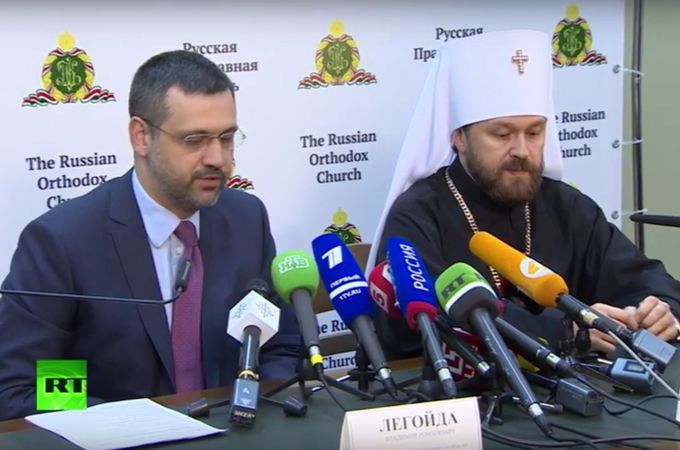
In its statement “On the Situation Caused by the Refusal of Several Local Orthodox Churches to Participate in the Holy and Great Council of the Orthodox Church” the Holy Synod of the Russian Orthodox Church proposes to postpone the Pan-Orthodox Council, reports The Department for External Church Relations of the ROC.
It is reported that due to the refusal of several local Churches to take part in the Holy and Orthodox Cathedral the absence of a preliminary consensus on the Council’s Working Procedure and the documents under consideration, the Holy Synod of the Russian Orthodox Church has proposed to postpone the Pan-Orthodox Council to a later date.
In connection with the above, the Holy Synod, in keeping with the decision made by the Russian Orthodox Church Bishops’ Council on February 2-3, 2016, resolves that “support be given to the proposals of the Orthodox Churches of Antioch, Georgia, Serbia and Bulgaria to postpone the convocation of the Pan-Orthodox Council for a time which will need to be established as a result of a pan-Orthodox discussion and under the indispensable condition that the Primates of all the generally recognized Local autocephalous Orthodox Church agree to it.”
The Holy Synod also suggests that “an appropriate proposal be immediately sent to His Holiness Patriarch Bartholomew of Constantinople and all the Primates of Local Orthodox Churches.”
The Statement of the ROC reads that “in case of this proposal is not accepted by the Most Holy Church of Constantinople while the Council on Crete is still convened despite the absence of the consent of several Local Orthodox Churches, the participation of the delegation of the Russian Orthodox Church in it, with profound regret, be considered impossible.”
Also, the Holy Synod states that “effort to consolidate pan-Orthodox cooperation in preparing the future Holy and Great Council be continued by all possible means, as it is called to become a true witness to the unity of the Holy Universal and Apostolic Church.”
It express an opinion that “a successful accomplishment of the Council’s preparation could be promoted by the more intensive work of the Pan-Orthodox Secretariat as a body which makes it possible to examine proposals for the resolution of problematic issues, to settle the existing differences, to finalize the necessary documents and to remove all the obstacles for the convocation and God-pleasing completion of the Holy and Great Council of the Orthodox Church.”
The Holy Synod considers it “desirable that, taking into account the proposals expressed in many Local Orthodox Churches, the future Council could be attended by all the hierarchs of the Holy Churches of God without restrictions, since it will certainly enhance the authority of the decisions made by the Council.”
Read also
BOC Patriarch: Bartholomew cannot be anathematized without conciliar decision
Patriarch Daniel said that no Local Orthodox Church has anathematized the Patriarch of Constantinople, warning that misguided zeal can lead people to place themselves above the Church.
Church сonflicts in Ukraine are not particularly bloody, DESS head says
Viktor Yelensky claimed that tensions between Orthodox Christians in Ukraine are "far from dramatic" and that parish transfers to the OCU generally take place without conflict.
Bulgarian Patriarch: Athos monasteries do not admit OCU clergy
The Bulgarian Primate noted that the monasteries of Iviron, Vatopedi, Hilandar, and Zograf do not admit OCU clergy but remain in communion with Patriarch Bartholomew.
Rivne Eparchy of UOC marks 290th anniversary of Bilashiv church
Metropolitan Pimen led a festive Liturgy marking the 290th anniversary of the founding of the Church of the Nativity of Theotokos in Bilashiv.
UOC priest killed in war laid to rest in Kovel
The Volodymyr-Volynskyi Eparchy bid farewell to Archpriest Andriy Korinchuk, rector of several parishes, who was killed in the war.
Vyshhorod mayor accused of damaging monument to Sts. Boris and Gleb
The creators of the monument to Sts. Boris and Gleb accused the Vyshhorod mayor of damaging it and demanded that it be restored to its original appearance.