Teachings of Filaret. “On federalization sin”
For this end we must continually compare our life to the Gospel and live according to it. In Gospel of Luke there is an episode where Christ speaks about the people who were killed at the order of Pontius Pilate, as well as those who died due to the tumble of Siloam Tower:There were present at that season some who told Him about the Galileans whose blood Pilate had mingled with their sacrifices. And Jesus answered and said to them, “Do you suppose that these Galileans were worse sinners than all other Galileans, because they suffered such things? Or those eighteen on whom the tower in Siloam fell and killed them: do you think that they were worse sinners than all the others who lived in Jerusalem?”
The Lord does not say that those who perished are guilty and thus they deserved such fate. In both cases He tells his listeners: “I tell you, no; but unless you repent you will all likewise perish.”
But not all those, who call themselves pastors, direct their parishioners toward evangelical values.
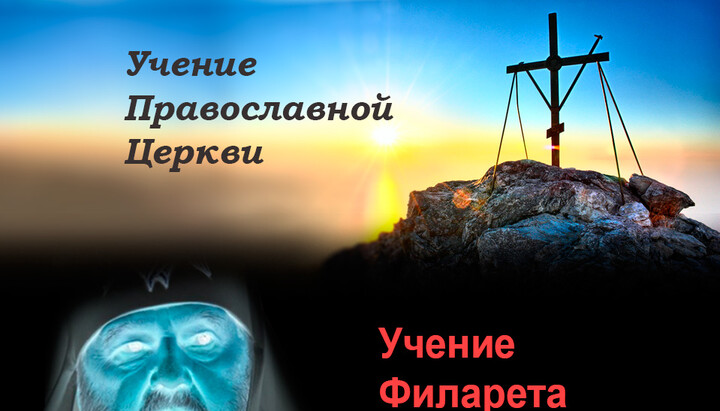
Speaking about the aggrieved Donbass residents, chief of the Kiev Patriarchate Filaret affirms they’ve brought their travails on themselves. MOREOVER, THE KIEV PATRIARCHATE CHIEF BELIEVES THEY CAN WASH OUT THEIR FAULT IN BLOOD ONLY.
Yet the most surprising thing, in Filaret’s opinion, is that Donbass Ukrainians committed a completely new sin in the Church history – the sin of federalization. It’s hard not to notice that Filaret Denisenko called a state structure model as a sin. However, it is not clear how it may be related to spiritual life the Church is supposed to take care of.
Read also
Brother of tax collector and brother of Lord
The Gospel is silent about the son of Alphaeus, and commentators have argued for centuries over who he was. And the Church commemorates two apostles named James in close proximity.
Prayer commemorations instead of loving embraces
At every Orthodox wedding, the choir sings a hymn to the martyrs. For families separated by war, these words carry a special meaning.
Honest atheism vs. spiritual hypocrisy
The 70th anniversary of Albert Camus’s Nobel Prize recalls an uncompromising challenge to Christianity. An honest unbeliever brings theology back to the mystery of the Cross.
The valley of trouble and the gateway of hope
One soldier buried an expensive cloak and some gold beneath his tent. Because of this, all Israel lost a battle. Why did one man’s sin bring disaster upon an entire nation?
From love spells to bishop's throne
Antioch’s most powerful sorcerer sent demons against a devout young Christian woman three times – and failed every time. In the end, a demon himself revealed the truth that led to his conversion.
The Weeping Queen of Blachernae
On the night of the Feast of the Protection, only two people witnessed the miracle in the Church of Blachernae. Everyone else prayed and saw nothing. Yet they, too, received grace.