The Russian Church suggests fining for abusive language in public places
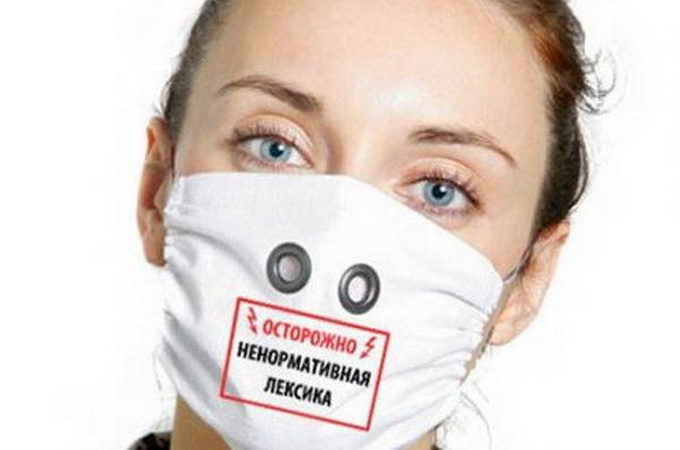
"I think that for saying foul words in public places people should be fined, thus we will break this ugly habit. We should not contaminate our life and environment with the words that should not be said," head of the Synodal Department for External Church Relations Metropolitan Hilarion of Volokolamsk said on air of his program Church and the World on Rossiya 24 TV chanel.
He says that the Church cares much about it telling people that words do not only reflect a person's inner condition, but also form corresponding views and attitude to life.
"It is not by chance that the Lord said "everyone will have to give account on the Judgment Day for each idle word they have spoken.” And I think that the Lord will ask very strictly for abusive words from every person," the hierarch said.
He confessed that he had not said a single foul word for fifty years of his life, even when he served in the army.
"First, they laughed at me, mocked at me for not speaking foul language. But at the end of my service term they did not use abusive language in my presence, so I managed to protect my position. It was not simple, especially in the beginning, as a young soldier is subjected to various mockeries and scorn, and here I had such a peculiarity. But I did not step aside from my principle and in the end I felt that people were embarrassed to use abusive language when I am near," the Metropolitan said.
How President of the Russian Academy of Education Ludmila Verbitskaya noted in the program in her turn, she cannot understand "the ease with which even educated people, intelligent find it possible in some cases to use abusive language."
"I absolutely agreed that it should be punished," she said.
Read also
Volodymyr-Volynskyi Eparchy marks 30 years since restoration
The Pantanassa Icon and relics of Prince Volodymyr have arrived in Kovel and will visit churches across the Volodymyr-Volynskyi Eparchy to mark the 30th anniversary of the restoration of the episcopal see.
Bukovyna faithful bring humanitarian aid to Kherson region residents
The UOC’s Chernivtsi Eparchy delivered food to Holy Spirit Cathedral in Kherson.
Ukraine must have its own faith: Poroshenko's party lays out peace terms
Poroshenko’s party European Solidarity described church policy as a matter of national sovereignty and said there can be no compromises in this area.
432 UOC churches damaged in Ukraine during war, report says
According to the Religion on Fire project, 807 religious buildings in Ukraine have been damaged or destroyed as a result of hostilities.
DESS official gives number of clergy exempt from mobilization in Ukraine
A DESS representative said the actual number of clergy exempt from mobilization is significantly lower than the number of religious organizations designated as critical.
Cabinet keeps gas prices unchanged for religious organizations
The Cabinet has fixed gas prices for religious organizations through the end of the 2026–2027 heating season.