The war of Uniates against the UOC: a white klobuk – a black soul
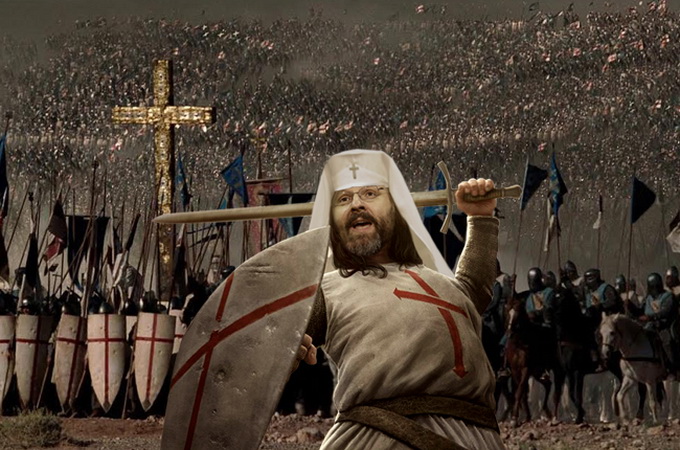
Why do the icons of the Uniate churches depict Yanukovich, Yushchenko, Putin, Kuzma and the UGCC head Shevchuk?
Why does the patriotic UGCC serve in the "language of the invader"?
Why does Greek-Catholic leader Sviatoslav Shevchuk call Taras Shevchenko a Uniate?
Why do Uniates mimic the Orthodox Church stating that:
- the UGCC has Orthodox dogmatism,
- the UGCC is an heir of the Kiev Orthodoxy,
- Catholicism does not contradict the purity of the Orthodox faith,
- Prince Vladimir, having baptized Rus in the Orthodox faith, made the European choice.
And finally, why did exactly the Uniate MPs turn out to be the authors of anti-Orthodox bills 4128, 4511 and even the initiators of the address to the Ecumenical Patriarch on legalization of the UOC-KP?
Read also
Yelensky’s plan: Why is DESS demanding what the UOC has already done?
DESS is demanding that the UOC take steps it has already taken, while offering no assurance that further demands will not follow. What is behind Yelensky’s ultimatum?
Why OCU hierarchy lacks canonical ordination: what Local Churches say
The OCU head refuses to address invalidity of his ordinations. But almost all Local Churches speak of it – even those that recognized the OCU.
Why nation-first advocates do not call for peace
Ukraine’s population is declining by nearly one million people a year, and experts are warning of the nation’s demographic extinction. Yet the leaders of the Orthodox Church of Ukraine (OCU) and the Ukrainian Greek Catholic Church (UGCC) continue to call for war and mobilization.
The deception that decided the fate of the Tomos
In 2008, the "Filaret problem" derailed Yushchenko's plan. In 2018, Poroshenko solved it in just one hour – with a police escort for the Greeks and verbal promises to Filaret.
Lawyers in the crosshairs: How UOC is being stripped of its right to defense
Activists harass UOC lawyers outside courthouses, call them “traitors” on air, and promise them a “warm welcome” at hearings. The Church’s right to a legal defense is at stake.
How to respond to persecution: Lessons from St. Silouan the Athonite
The Church can and should be defended, but without malice. Why love for persecutors is not weakness but the only way to preserve the Spirit of Christ in the midst of the struggle.