Civil servant: Fanar may deny not only Mazepa’s anathema but also Filaret’s
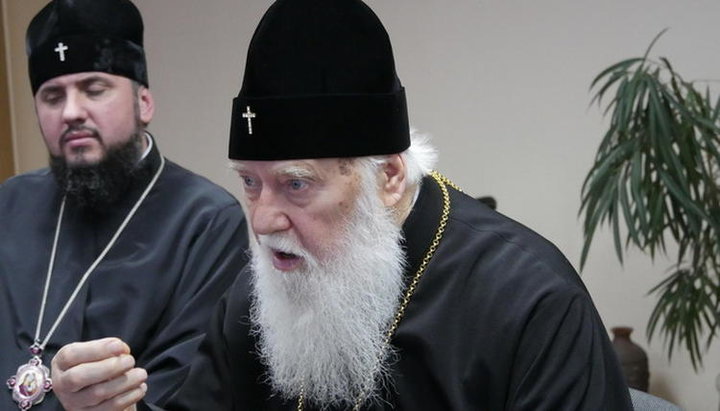
Leader of the UOC KP Filaret Denisenko
The Moscow-pronounced anathema has never existed for the Patriarchate of Constantinople so this can serve as a basis for the next cardinal step. This was said by Director of the Department for Religious Affairs of the Ministry of Culture of Ukraine Andrey Yurash in his comment to Gazeta.ua.
According to the official, the Phanar did not recognize the canonical anathema pronounced by the Russian Orthodox Church on Ukrainian hetman Ivan Mazepa. At the World Council of Churches in Geneva, the representative of the Patriarchate of Constantinople, Archbishop Job (Gecha) of Telmessos explained that after the first destruction by the Russian troops of Zaporozhye Sich in 1709, the Ukrainian Cossacks on having come under the protectorate of the Crimean Khan returned under the jurisdiction of Phanar, while Mazepa, along with Philip Orlick, were among the first to do it.
"Vladyka Job is an official clergyman to speak on behalf of the Ecumenical Patriarchate," the official commented. “This statement can be the basis for the next important step, namely, for the non-recognition of the anathema by the Moscow Patriarchate regarding Patriarch Filaret."
The official is sure that politics cannot serve as grounds for excommunication as it was in the case of Ivan Mazepa and Filaret: "Anathema is an excommunication due to the violation of certain ecclesiastic canons. Mazepa did not do this. Similarly, Patriarch Filaret did nothing to violate Orthodox dogmata. None of his decisions did harm to the Orthodox dogmata. Thus, the anathema, which was laid on him in 1997, is unfair."
"The statement about Mazepa is now one of the biggest problems for the ROC. This shows Ukraine and the entire Orthodox world that the decisions taken by Moscow may not be supported by the Ecumenical Patriarchate being first by the honor," Yurash summarized.
As reported by the UOJ, the ecclesiastic grounds for anathematizing Mazepa were sufficient. The ROC excommunicated the hetman on November 12, 1708 after his high treason – defection to Swedish King Charles XII during the Northern War.
On June 11, 1992, the Bishops' Council of the Russian Orthodox Church decided to "disgown Metropolitan Filaret (Denisenko), depriving him of all degrees of priesthood and all rights associated with staying in the clergy", for his "cruel and arrogant treatment of subordinate clergy, dictatorship and blackmail (Titus 1, 7-8, rule 27 of the Holy Apostles), the temptation of believers by his personal life (Matthew 18, 7; rule 3 of the First Ecumenical Council, rule 5 of the Fifth-Sixth Ecumenical Council), perjury (rule 25 of the Holy Apostles), public slander and blasphemy against the Bishops' Council (rule 6 of the Second Ecumenical Council), performance of sacred acts, including ordination, in the state of excommunication (rule 28 of the Holy Apostles), causing schism in the Church (rule 15 of the First-Second Council).” In 1997, at the Bishops' Council of the Russian Orthodox Church in St. Daniel Monastery based in Moscow, Filaret was excommunicated and anathematized. The resolution was recognized by the other Local Orthodox Churches.
Read also
Ukrainians help restore Serbian Orthodox church in Paris
Orthodox Ukrainians have become regular parishioners of St. Sava Church in Paris and have taken part in its restoration.
Bulgarian Church clergy and laity oppose Phanar head’s visit
More than 2,000 clergy and laity have called for the Ecumenical Patriarch’s visit to be canceled, citing disagreement with his actions and concerns that the visit could legitimize schism.
Unknown intruders break down doors at two UOC churches in Sloviansk
Archbishop Paisiy said OCU activists are suspected of breaking into the churches in Sloviansk, and police have launched an investigation.
Sviatohirsk Lavra prays for murdered monk on 40th day after death
The brethren of the Sviatohirsk Lavra held a memorial service for murdered Monk Varsonofiy, calling on the faithful to pray for the newly departed monk.
Polish Culture Ministry funds restoration of Armenian cathedral in Lviv
An international project supported by Poland aims to preserve the unique artistic heritage of the Armenian Cathedral in Lviv.
Persecuted UOC parish in Rakiv Lis celebrates patronal feast in new church
The faithful marked the fifth anniversary of the consecration of the church built to replace the one that was seized, as well as its patronal feast, in the Volyn village of Rakiv Lis.