Experts clarify implications of martial law for believers
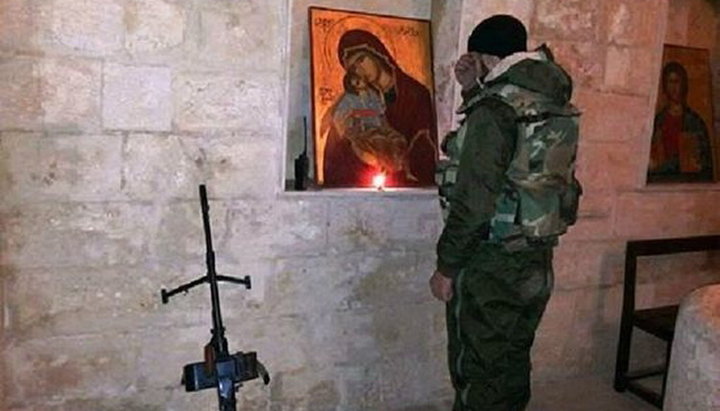
The imposition of martial law does not restrict the right to freedom of religion
In addition, religious leaders and believers may be restricted in their right to freedom of movement, which may concern, for example, missionary activity. This follows from the Decree of the President of Ukraine of 26 November 2018, No. 393 “On the Imposition of Martial Law in Ukraine”, which the Verkhovna Rada approved on the same day, having adopted Law No. 9338, reports the Institute for Religious Freedom.
At the same time, experts write that the right to freedom of religion is associated with other constitutional rights and freedoms. In particular, the Decree on the Imposition of Martial Law makes it possible to temporarily restrict the constitutional right of citizens to peaceful assembly, which includes outdoor religious events or processions.
Article 35 of the Constitution of Ukraine guarantees that “everyone has the right to freedom of beliefs and religion. This right includes the freedom to profess any religion or to profess no religion, to freely practice religious rites and ceremonial rituals, alone or collectively, and to pursue religious activities.”
Experts explain: the right to freedom of beliefs and religion in accordance with Part 2 of Article 64 of the Constitution of Ukraine is in the list of those constitutional rights and freedoms that can be limited under martial law, indicating the duration of these restrictions. However, the Decree of the President of Ukraine on the imposition of martial law does not mention the possibility of restricting religious freedom.
At the same time, Article 4 of the UN International Covenant on Civil and Political Rights states that participating states must ensure the right to freedom of thought, conscience and religion even during the state of emergency in a country where the life of the nation is threatened.
Martial law was introduced due to the exacerbation of the situation in the Kerch Strait area for 30 days on November 25, 2018 – from 14:00 on November 26 to 14:00 on December 26, 2018. According to the decision of the Verkhovna Rada, martial law does not extend to the whole territory of Ukraine, being confined only to Vinnitsa, Lugansk, Nikolaev, Odessa, Sumy, Kharkov, Chernigov, Donetsk, Zaporozhye, Kherson regions, as well as inland waters of Ukraine in the Azov-Kerch water area.
Read also
Khust Eparchy honors memory of St. Job of Uholka
A Liturgy is served in Mala Uholka, a birthplace of St. Job of Uholka, on the saint's feast day.
UOC parish in Cologne donates ultrasound machine to Kharkiv region hospital
In Cologne, UOC believers raised funds for an ultrasound machine for the Kehychivka district hospital in the Kharkiv region.
Shevchuk tells Pope Leo of Ukraine's preparations for "another harsh winter"
The head of the UGCC expressed "special gratitude" to the Pope for his phone calls with Putin and Zelensky.
Berlin hierarch comments on Phanar document published by UOJ-USA
Metropolitan Mark called the information about the 2018 "Unification Council" alarming if confirmed, and expressed hope that Patriarch Bartholomew will reconsider his position.
UOC marks Synaxis of All Saints of Volyn Land at Lutsk cathedral
Metropolitan Serhiy of Ternopil and Kremenets led the Liturgy on the feast day of the Lutsk cathedral of All Saints of the Volyn Land.
SBU detains OCU cleric who organized draft evader's escape for money
In Transcarpathia, law enforcement officers detained a clergyman of the OCU who arranged for a draft evader to be smuggled into Slovakia for $15,000.