Elder Hilarion of Athos: On the demon-possessed and the sign of the Cross
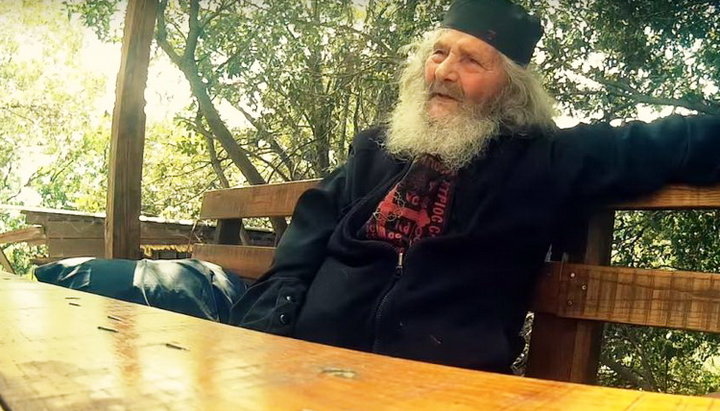
Elder Hilarion
But it is precisely by the power of the Cross that the Lord protects us from demons.
Great is the power of the Life-giving Cross. Understand, the Cross is our Divine seal. When we cross, we put the seal to the print and become one with the Cross. And we unite with God by this Cross. And if you just wave your hand in front of your face – can you guess who you unite with?
I’ll tell you: that is the very gestures that those who crucified Christ made. Therefore, the demons try to teach Christians these gestures to laugh at them. Such Christians, without even realizing it, become like those who crucified Christ.
This is a problem of people – they are running from the Cross: I want to live in comfort, have sweet dreams, enjoy nice meals, I also want to get Divine сare. No, it doesn't work that way. Care must be earned. The true cross, put on the body straight, burns demons.
Why does it happen that people put a cross right but the Lord does not give a prayer? This is because it should be done not only in the right way but with diligence, with pain, with love.
In the songs, we sing that the Cross is a “strange miracle”. "Strange" means unusual. What is unusual about it? The fact is that it is a spring from which the spiritual gifts are poured out, streamed on you. It means that the Cross is like a spring from which rivers of living water flow.
I will tell you one case. There are people obviously demon-possessed. And there are those who have hidden demons that do not manifest themselves explicitly or very rarely manifest. Usually, they cross themselves like this, waving in front of their face. Once such a man crossed himself with all his heart, put the sign of the cross on himself in the right way and said: “What happiness – the Cross of the Lord!” And the demon left him. He abandoned him with a cry: “A moron! For so many years I have taught you to make the wrong cross, but you still cannot learn!”
So, it is necessary to put the sign of the cross with diligence, with pain, and have trust in God.
Do you know how I’m praying? “My Christ! You are the Pastor chief, the First Pastor! Put me with Your sheep at thy right hand!”
Those people who do not have Divine diligence, are not true Christians harm laymen. These pseudo-Christians compromise us, compromise before the external.
So, the seal of the Cross must be put not on the air, but on the body straight, with diligence and pain.
Why the priest, serving a moleben, makes the cross on four sides, sanctifying all the space around – he drives away the demons. They run away from the Cross.
Demons are everywhere. And on the left, and on the right, and above, and below. They are the same intelligent beings as we are. They even have their own names.
During the sacrament of Baptism, the man renounces Satan, and the demons run from the Cross. That's why we say: "A strange miracle, Thy Holy Cross, Lord!"
Source: Information portal of the Holy Mount Athos
Read also
Facade of bones and facade of light
Antoni Gaudí spent forty-three years building a church in Barcelona, knowing that this construction was for the ages.
Trial of a dead pope
Once in Rome, the body of a deceased pope was seated on the throne and put on trial. The accusation relied on a church canon that had once saved his see.
Monastery built in defiance of king
When Orthodox believers in Minsk were left with just one church, townspeople decided to build another – and even a royal decree did not stop them.
Young Mother and Sleeping Christ
Michelangelo carved a Virgin Mary who looks younger than her Son – and signed his name in marble for the only time in his life. Neither of these peculiarities was accidental.
Orthodox books from a Uniate printing press
In the 18th century, Uniate monks at Pochaiv printed books used in prayer by Orthodox Christians and Old Believers alike.
The story of the honey brotherhood
The Mogilev Brotherhood began with members pooling money to brew honey drinks for feast days – and eventually grew to have its own printing press.