Govorun: Without state pressure, “Unification Council” could hardly happen
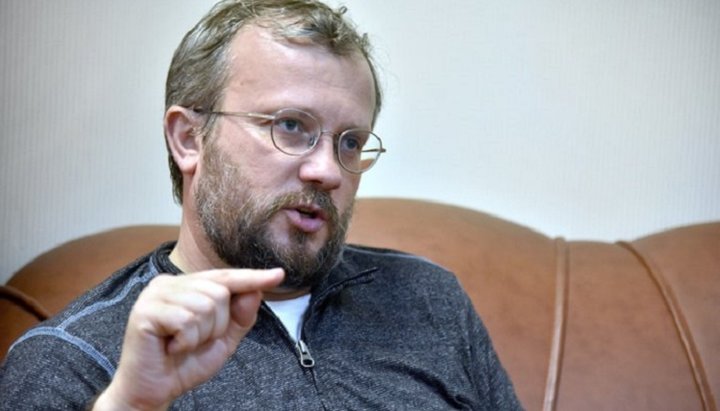
Archimandrite Kirill (Govorun). Photo: LB.ua
Without pressure from the state and personally President Petro Poroshenko, the “Unification Council” would hardly have taken place, and Filaret would not have made concessions and compromises. This point of view was expressed by the theologian, professor of the Loyola Marymount University in Los Angeles, Archimandrite Kirill (Govorun) in an interview with LB.ua.
“The process of state participation in the formation of a new church structure was ambivalent,” said Govorun. “I do not assess right now how correct this is from the point of view of the constitutional norm on the separation of Church and state, although this can also be said. But speaking about the observance of procedures, one thing is clear: without pressure from the state and personally President Poroshenko, the Council would hardly have taken place. And Metropolitan Filaret would not have made concessions and compromises, the most significant of which is the refusal to participate in the election of primate but for the pressure of the state.”
He stressed that the "head" of the OCU was also elected under pressure from the state, but the state showed indifference to the quality of the church life itself, which led to "side effects".
“The pressure had a negative side, a side effect. The interference of the state at that time in the affairs of the Church led to the violation of conciliar procedures. And this makes itself felt not because the state has now stepped aside from church affairs but because the time has come for side effects. They would be inevitable even if Poroshenko had been re-elected for a second term. The reason is the quality of church life, to which the state was indifferent,” the archimandrite explained.
According to him, the presidential administration showed a certain passivity, in connection with which “the representation of the entire Ukrainian Orthodox community in the OCU is significantly narrowed,” which is the main reason for the OCU to remain unrecognized by other Orthodox Churches.
“For Poroshenko’s team, it was important to hold a Council, form a new church structure with a new name and get the Tomos for it. It seemed to them not so important what quality this structure will be of, how widely represented and inclusive,” explained Govorun.
We recall that Archimandrite Kirill (Govorun) was named among the possible candidates for primacy in the OCU. The Presidential Administration did not include the Archimandrite in the lists of participants in the “Unification Council”, although he specifically flew to Kiev from Los Angeles.
Read also
Khust Eparchy honors memory of St. Job of Uholka
A Liturgy is served in Mala Uholka, a birthplace of St. Job of Uholka, on the saint's feast day.
UOC parish in Cologne donates ultrasound machine to Kharkiv region hospital
In Cologne, UOC believers raised funds for an ultrasound machine for the Kehychivka district hospital in the Kharkiv region.
Shevchuk tells Pope Leo of Ukraine's preparations for "another harsh winter"
The head of the UGCC expressed "special gratitude" to the Pope for his phone calls with Putin and Zelensky.
Berlin hierarch comments on Phanar document published by UOJ-USA
Metropolitan Mark called the information about the 2018 "Unification Council" alarming if confirmed, and expressed hope that Patriarch Bartholomew will reconsider his position.
UOC marks Synaxis of All Saints of Volyn Land at Lutsk cathedral
Metropolitan Serhiy of Ternopil and Kremenets led the Liturgy on the feast day of the Lutsk cathedral of All Saints of the Volyn Land.
SBU detains OCU cleric who organized draft evader's escape for money
In Transcarpathia, law enforcement officers detained a clergyman of the OCU who arranged for a draft evader to be smuggled into Slovakia for $15,000.