Epiphany: OCU is to set up Romanian vicariate for 150 parishes of Bukovina
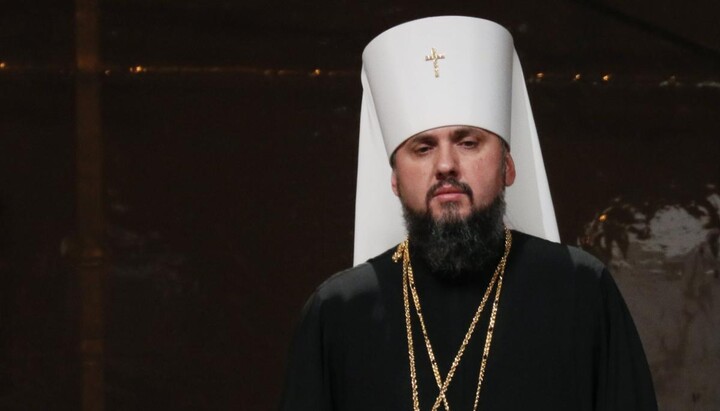
Head of the OCU Epiphany Dumenko. Photo: Glavred
The head of the newly created religious structure, Epiphany Dumenko, said that a vicariate would be created in Bukovina for Romanian-speaking parishes wishing to transfer to the OCU. He said this in an interview with Ukrinform.
In particular, Dumenko said that “as part of the Romanian Orthodox Church there are parishes that pray in Ukrainian – they make up a Ukrainian-speaking vicariate,” and the OCU has “a desire to reflect this situation in the future by creating a vicariate of the Ukrainian Orthodox Church for Romanian parishes: there are about 150 in Bukovina.”
In addition, Epiphany noted that “vicariates form an integral part of the church on whose territory they are canonically located, but their language of worship, in this case, is Romanian.”
At the same time, “to support such a model”, according to Dumenko, will be possible only if “if agreement is reached with the Romanian Orthodox Church”.
Also, Epiphany said that the parishes that choose to join the OCU but ask for preserving the Church Slavonic language, will still be gradually Ukrainized: “Now there are parishes that come to us and ask them to preserve the Slavic language and we do not create any obstacles for them in this respect. But the sermon will be nevertheless performed in the Ukrainian language. For example, in such parishes, the reading of the Gospel can be performed in the Ukrainian language and simultaneously in the Slavic language at first, but over time, in the future, the society will gradually adopt Ukrainian.”
Earlier, Epiphany declared that he was negotiating with the Romanian Church and was counting on "conducting a dialogue in order to resolve the issues that exist in Bukovina."
At the same time, according to the UOJ, there is not a single Romanian parish in the OCU in Bukovina. Obviously, Epiphany counts on negotiations with the Romanian Church to seize the Romanian temples from the UOC. However, it is hard to commit such seizures in Bukovina.
Moreover, representatives of the OCU proposed to the priests of such parishes that they “hit the road to Romania”.
Back in March, the OCU “metropolitan” Daniel Kovalchuk of Bukovina and Chernovtsy complained that the “transitions” of the UOC communities to the OCU were very sluggish: “There is nothing to brag about. It seems to me that 11 or maybe, 12 churches have moved.” In fact, since the presidential elections, the seizures have almost come to naught.
Recall that the Holy Synod of the Romanian Church appealed to Phanar with the request “to clarify the problem of non-canonical hierarchs and priests who belonged to the former ‘Kiev Patriarchate’.”
Read also
OCU activist admits breaking into UOC church in Sloviansk
Oleksandr Onyshchenko said that the OCU held its first "service" at the Seraphim Church, which had previously been broken into by forcing the locks and doors.
Archimandrite Ioustinos, longtime keeper of Jacob's Well, dies in Jordan
Archimandrite Ioustinos (Mamallos), the keeper of Jacob's Well in Nablus, has died after a prolonged illness.
Pilgrim group from Kyiv Theological Seminary visits Mount Athos
KTS students are making a pilgrimage to the holy sites of Romania, Greece, Mount Athos and Italy.
UOC cathedral celebrates its patronal feast in Ternopil
The service in the cathedral of the Holy Martyrs Faith, Hope, Love and their mother Sophia was led by Metropolitan Serhii of Ternopil, concelebrated by four hierarchs.
MinCulture marks centenary of Soviet-era reserve at Lavra's Refectory Church
Representatives of the Ministry of Culture presented awards to the Reserve's employees on the occasion of the anniversary at the Refectory Church of the Lavra.
Conference to mark 1700th anniversary of Christianity adoption held in Georgia
In Georgia, representatives of the Church and the state noted the defining role of Christianity in the country's cultural development.