UOC-KP representatives disrupt a meeting of Kiev District Court
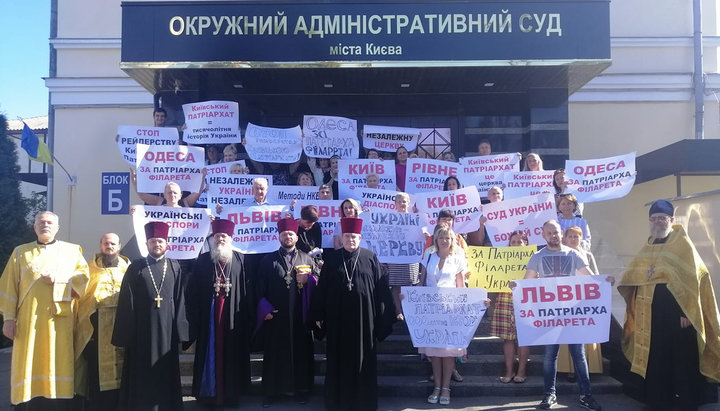
Representatives of the UOC-KP under the building of Kiev District Court. Photo: UOC-KP Facebook page
On August 27, 2019, a group of “priests” of the Kiev Patriarchate, as well as several dozen believers of this structure, came to a meeting of the Kiev District Court “to protect their constitutional rights and defend the right to existence of the Ukrainian Orthodox Church of the Kiev Patriarchate,” the official Facebook page says.
Some of the faithful and “clergy” went into the courtroom and actually disrupted the hearings of the lawsuit of the UOC-KP against the Ministry of Culture on the liquidation of the Kiev Patriarchate.
The supporters of the UOC-KP who could not attend the court session made a “prayer for God's blessing for a good deed” in the courtyard of the institution.
Earlier, the UOJ wrote that representatives of the UOC-KP announced the acts of civil disobedience in connection with the illegal liquidation of the Kiev Patriarchate by the Ministry of Culture.
Read also
Khust Eparchy priest who shot people in Vyshkovo banned from ministry
The Khust Eparchy of the UOC has notified police that it has banned from ministry a priest suspected of killing three people in Vyshkovo, Transcarpathia.
Metropolitan Onuphry congratulates Georgia on 1,700 years of Christianity
The Primate of the UOC sent a message to Patriarch Shio III on the anniversary of Christianity becoming the state religion in Georgia.
Zakarpattia marks 25th anniversary of Alexis of Carpatho-Russia's glorification
An all-night vigil was served at St. Nicholas Monastery in the village of Iza-Karputlash to celebrate the 25th anniversary of the glorification of St. Alexis of Carpatho-Russia.
DESS finds Balta Eparchy of UOC affiliated with ROC
Yelensky-headed state service said it found signs of affiliation of the Balta Eparchy Administration of the UOC with the ROC.
Upper Lavra court hearing postponed
The next court hearing in the Upper Lavra case has been scheduled for November 3.
UOC priest blesses ambulances at Kamianske medical center
A UOC priest in Kamianske blessed ambulances for a medical facility and wished its doctors God's help in their work.