Rector of Yasinia church: Those who voted for OCU do not go to church
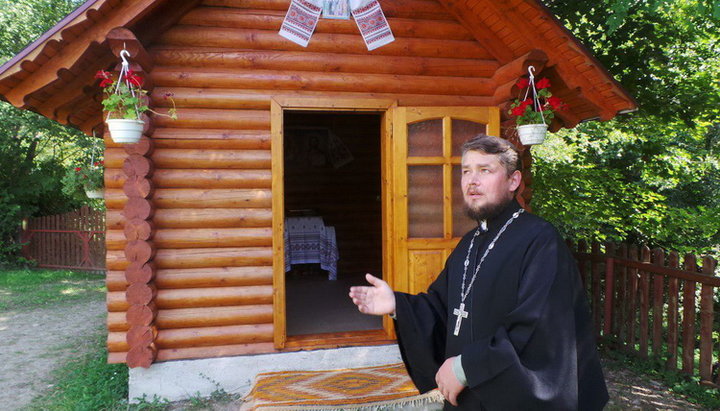
Rector of the church in Yasinia, Archpriest Sergey Slisarenko: Those who voted for the OCU do not go to church. Photo: spzh.news
On September 2, 2019, Archpriest Sergey Slisarenko, Rector of the Holy Elijah community of the UOC in the urban village of Yasinia of the Rakhov district, Transcarpathian region, said in a commentary to the UOJ that the believers will uphold their legal rights in court.
“Now our community has been divided into two halves: some believers remain in the UOC, others have moved to the OCU. I believe, and so it is, that the temple was seized with the help of false signatures and testimonies. Not everyone was notified that the temple should be transferred. But still, they turn a blind eye to this.
And now that part of the community that has remained in the UOC, peacefully, without any conflict, by purely legal means is seeking the truth of God and the truth in our land – Ukraine.
Now representatives of the so-called OCU are serving in the temple while we are serving in the St. Tryphon Chapel, which does not close. We serve the Liturgy every Sunday, on holidays, daily services. Now 15-20 people come to our chapel weekly. A little more, about 20-25 people, go to the representatives of the OCU. It happens differently, I will not clarify now.
That is, in fact, who voted does not go to church. And those who have gone before keep going now, only thoughts and positions are divided in half. But this supposedly gives them the right, in accordance with the law (law No. 2841 - Ed.) of the Verkhovna Rada, which decided that by a decision of two-thirds of the votes the church is transferred. They do not have two-thirds of the votes.
We answer that over time we will return the temple of God legally, through the courts. The law of Ukraine is on our side. We always show Christian love and are always happy to communicate with everyone, discuss issues, but they do not want this. They follow the path of untruth and perjury,” the clergyman explained.
We recall that on February 12, 2019, on the feast of the Three Hierarchs, the Holy Elijah community of the UOC in the Transcarpathian village of Yasinia / Lopushanka, left without a church, for the first time gathered for prayer in the open air – in the churchyard near the chapel. That day, the believers waited for 4 hours until they could generally get to the church, and it was on that day that many residents realized that they had been simply used to "transfer" the community to the OCU.
Also, after the division in the community, OCU activists repeatedly came to the rector and threatened to evict his family from the church house, where they remain registered. At the same time, the UOC believers ask the priest not to leave the parish.
Now, lawyers are working with the UOC community to return the temple.
Read also
Upper Lavra court hearing postponed
The next court hearing in the Upper Lavra case has been scheduled for November 3.
UOC priest blesses ambulances at Kamianske medical center
A UOC priest in Kamianske blessed ambulances for a medical facility and wished its doctors God's help in their work.
Dumenko to German ambassador: Law targeting UOC also applies to other groups
Epifaniy Dumenko sought to defend Ukraine’s law restricting religious organizations during a meeting with the German ambassador.
Activists bused to court hearings in UOC cases, media say
A minibus has been spotted transporting protesters to and from courthouses where UOC cases are being heard.
Firefighters save historic UOC church from fire in Zakarpattia
A fire broke out at a UOC church in the Tiachiv district, damaging the altar and church furnishings.
Volyn Eparchy faithful collect six tons of aid for Sviatohirsk Lavra
Believers in Volyn collected food and warm clothing for people displaced by the war who have found shelter at Sviatohirsk Lavra.