Archbishop Theodosius explains what temples can be visited in Greece
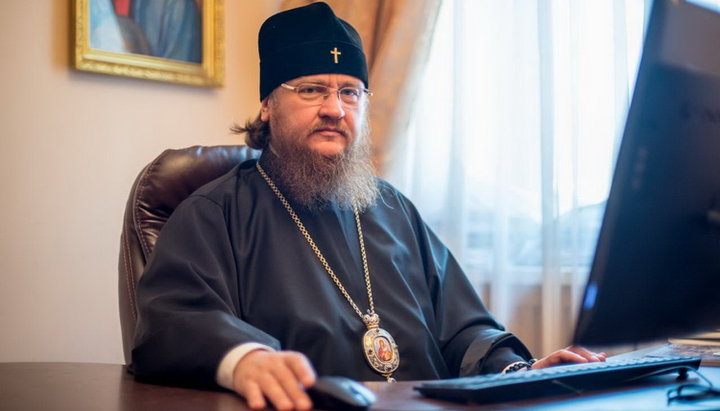
Archbishop Theodosius of Boyarka, the vicar of the Kiev Metropolis. Photo: news.church.ua
On October 22, 2019, the vicar of the Kiev Metropolitanate, Archbishop Theodosius of Boyarka, clarified on vicariate.church.ua whether it is possible to visit the churches of the Greek Orthodox Church and participate in the Sacraments.
"According to a recent decision of the Holy Synod, ‘prayer and Eucharistic communion with those bishops of the Church of Greece who have entered or will enter into such communion with representatives of Ukrainian non-canonical schismatic associations is ceased’. Nor are blessed pilgrimage trips to the dioceses run by the specified bishops. A list of these bishops and dioceses will be compiled and made public. A very wise and balanced decision of the Holy Synod,” the bishop emphasized.
According to him, it is necessary to understand that “the cessation of Eucharistic communion is a disciplinary measure and in no way speaks of the lack of grace in the Sacraments performed by the specified bishops and in their dioceses. I’m particularly talking about this since recently in the Orthodox community there has been a wide discussion about whether grace works in the sacraments performed by hierarchs who recognize the OCU and how one can ‘get infected’ with schism: having served with Patriarch Bartholomew, or having prayed at the service, where S. Dumenko (Epiphany) was commemorated”.
He explained: “This does not work so. According to the centuries-old tradition and practice of the Orthodox Church, the spirit of canonical rules and the precedents of church history, to deserve and be subjected to canonical punishment are not the same things. As long as the cleric isn’t defrocked, but only deserves it, the sacraments performed by him are considered valid.
Even if he sinfully dares to commit them, being banned (but not yet defrocked!). For this, there is a canonical deposition, which sets the final limit to the sacred actions of such a person. Therefore, Patriarch Bartholomew, not to mention the hierarchs and clergymen who concelebrated with him, did not lose the grace of the sacraments performed by him, even having held a joint service with the layman Sergei Dumenko (Epiphany). Although, this is a grave sin, of course, and it is subject to the Church trial. But there hasn’t been any yet.”
Therefore, the bishop says, breaking the Eucharistic communion with the Patriarchate of Constantinople as a whole and with a number of hierarchs of the Church of Greece “is a disciplinary measure for us, like a quarantine protecting us not to fall under the canons and the danger of defrocking”: “This cessation does not mean a lack of grace in the sacraments of the Greek hierarchs. As long as they sin but are not condemned by the Council, are not deprived of the dignity, their sacraments, including the ordinations performed by them, will be recognized in history as legal. And that means that they are so for us now, in contrast to the ‘sacraments’ of the OCU, for example, in which the thread of the apostolic succession is interrupted. Such is the canonical coordinate system that has been in the Orthodox Church throughout its history. In this coordinate system, the complex issues of healing schisms and the penitential return to the Church of those who fell away from it: in dignity or without dignity, have always been resolved. It is in this coordinate system that the ‘Augean stables’ that the Phanar has made right now, mixing the righteous with the sinful, the lawful and the lawless, will be cleared out over time.”
As reported earlier, the Holy Synod of the Russian Orthodox Church (ROC) adopted a statement on the recognition of the OCU by the Bishops' Council of the Greek Orthodox Church.
Read also
UOC cathedral celebrates its patronal feast in Ternopil
The service in the cathedral of the Holy Martyrs Faith, Hope, Love and their mother Sophia was led by Metropolitan Serhii of Ternopil, concelebrated by four hierarchs.
MinCulture marks centenary of Soviet-era reserve at Lavra's Refectory Church
Representatives of the Ministry of Culture presented awards to the Reserve's employees on the occasion of the anniversary at the Refectory Church of the Lavra.
Conference to mark 1700th anniversary of Christianity adoption held in Georgia
In Georgia, representatives of the Church and the state noted the defining role of Christianity in the country's cultural development.
MP urges to ease pressure on UOC for sake of peace
Oleksii Honcharenko proposed compromises on language, historical memory, and Church issues as part of efforts to achieve peace, saying those who wish to attend the “Russian Church” should be allowed to do so.
Court takes 17th-century church in Staryi Pochaiv from UOC community
A commercial court overturned a 2018 registrar’s decision and stripped the UOC’s Ternopil Eparchy of ownership of the 17th-century church.
Vinnytsia Eparchy honors Bar Icon of the Mother of God
Metropolitan Varsonofiy celebrated the Liturgy at the Bar Convent on the feast day of the wonderworking icon of the Mother of God.