Borodiansky: It’s not a priest’s function to decide who is a parishioner
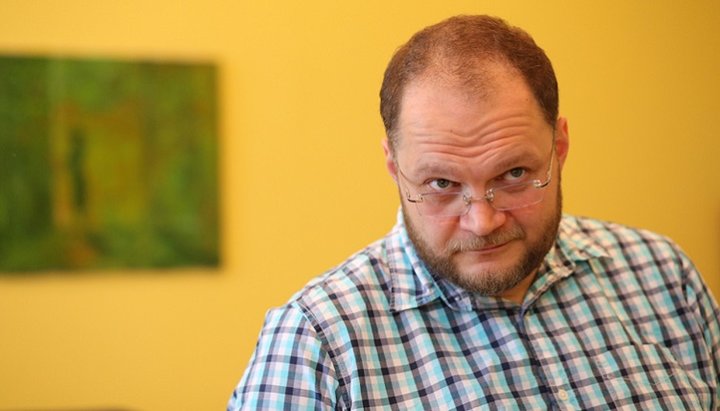
Minister of Culture, Youth and Sports Vladimir Borodiansky. Photo: from open sources
If a person believes that he has at least some relation to a religious community, he/she can take part in deciding on its future fate, since this is his fundamental right. The Minister of Culture, Youth and Sports Vladimir Borodiansky said this in an interview with the Religious Information Service of Ukraine (RISU).
Borodiansky is convinced that when it comes to the right to participate and vote at a meeting when changing the jurisdiction of a temple, two points should be taken into account here: self-identification of a person as a believer and residing in the village where the church is located.
“If a believer decided that he is by some percentage related to this religious organization, then he can already, in my opinion, vote and decide how this community will further live,” the new minister is convinced.
At the same time, in his view, the opinion of the priest regarding the membership in the church community of one or another person is completely unimportant: “It is not his function to determine who is and who is not his believers. He crosses the border if he says ‘you are right and you are wrong’.”
Regarding the conflict of concepts “church community” and “territorial community”, Borodiansky believes that the whole village in which the disputed church is located has the right to vote.
“It seems to me that we need to apply the territorial principle,” he explained. “There is a church in the village, it is one. Therefore, all the people who live here, who did not arrive an hour before the meeting, are all a territorial community. Further, this community can be divided into the one that affiliates with one denomination and the other that affiliates with another (denomination – Ed.). And then they can decide if there will be two churches or they will share one church.”
According to Borodiansky, if the priest “abuses his functions", not considering those who voted members of the church community, and opposes its decision, “this is bad".
At the same time, the official said that he sees nothing wrong with the fact that there will be alternate services in the church: “The church, the temple is a place where believers exercise their rights. If it “works” on two categories of laymen, philosophically I do not see any problems at all in this. This is a normal coexistence of two communities where believers exercise their rights. If this is impossible for some reason, then a second church will be built.”
Vladimir Borodiansky believes that due to the Tomos, the state helped millions of Ukrainians realize their religious rights and become members of the canonical OCU.
Read also
Upper Lavra court hearing postponed
The next court hearing in the Upper Lavra case has been scheduled for November 3.
UOC priest blesses ambulances at Kamianske medical center
A UOC priest in Kamianske blessed ambulances for a medical facility and wished its doctors God's help in their work.
Dumenko to German ambassador: Law targeting UOC also applies to other groups
Epifaniy Dumenko sought to defend Ukraine’s law restricting religious organizations during a meeting with the German ambassador.
Activists bused to court hearings in UOC cases, media say
A minibus has been spotted transporting protesters to and from courthouses where UOC cases are being heard.
Firefighters save historic UOC church from fire in Zakarpattia
A fire broke out at a UOC church in the Tiachiv district, damaging the altar and church furnishings.
Volyn Eparchy faithful collect six tons of aid for Sviatohirsk Lavra
Believers in Volyn collected food and warm clothing for people displaced by the war who have found shelter at Sviatohirsk Lavra.