WHO names Sweden’s strategy on fighting coronavirus a future life model
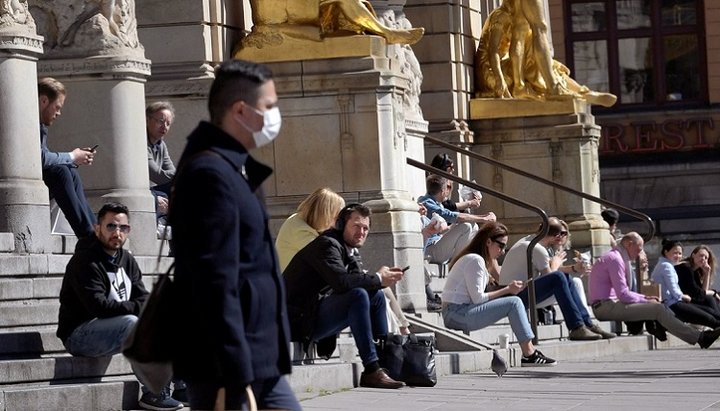
Sweden in many respects represents the future model of a society in which not everything is closed, according to WHO. Photo: skynewsarabia.com
Michael Ryan, Executive Director of the World Health Organization (WHO) Health Emergencies Program, described Sweden’s strategy to combat the COVID-19 pandemic as “the future model of a society in which not everything is closed.” He stated this during a press conference on April 29, 2020, reports the Swedish Dagens Nyheter edition.
According to the WHO representative, the notion that Sweden allowed the coronavirus infection to spread freely throughout the country without doing anything to fight the coronavirus is wrong, and “we can learn a lot from our colleagues from Sweden.”
“Nothing could be further from the truth. Sweden has introduced a very strong health policy ...> What they do in a different manner is that the authorities rely on their relationships with citizens, on their willingness to maintain physical distance and control themselves,” Ryan said.
According to him, in a situation where there is a high risk of the emergence of new waves of the virus, it is the Swedish model, which is based on trust in the population regarding compliance with the measures proposed by the authorities, which may turn out to be the most successful and become a “new norm” in the changing world, as it allows society function even in a crisis.
“I think that if we want to return to normal life, then Sweden in many respects represents the future model of a society in which not everything is closed,” he added.
The main distinction of the Swedish strategy is that the Swedish government, with the outbreak of the coronavirus pandemic, did not introduce draconian measures but allowed the public to decide on the physical distance on their own. Such a policy of Sweden has been repeatedly criticized both domestically and internationally.
As reported by the UOJ, earlier the WHO said that protective masks should be worn only if infected with the coronavirus or in direct contact with a patient with COVID-19.
Read also
Met. Meletiy consecrates house of worship for UOC community in Dankivtsi
Members of the persecuted UOC Intercession parish in Dankivtsi have converted a house into a place for communal prayer and worship services.
OCU eparchy sells church center site to developer for housing
The OCU’s Volyn Eparchy sold land intended for a spiritual center to a private developer planning to build townhouses and residential buildings.
SBU names UOC priest’s wife a suspect in Cherkasy region
The SBU accused Matushka Kateryna Prykotenko of “spreading enemy propaganda” through correspondence with parishioners.
UGCC cleric calls Russian Orthodox literature dangerous for clergy
While examining the causes of divisions within the UGCC, Yustyn Boiko concluded that Russian Orthodox literature had influenced Greek Catholic clergy.
UOC will play major role in achieving peace, says Vadym Novynskyi
UOC Protodeacon Vadym Novynskyi believes the Church will help bring about reconciliation within Ukrainian society after the war ends.
Catholic media outraged by forcible conscription of Uniate cleric
The Vatican’s Apostolic Nunciature has demanded the return of a forcibly mobilized Greek Catholic cleric.