UOC cleric: Now it's important to change people rather than fight slavery
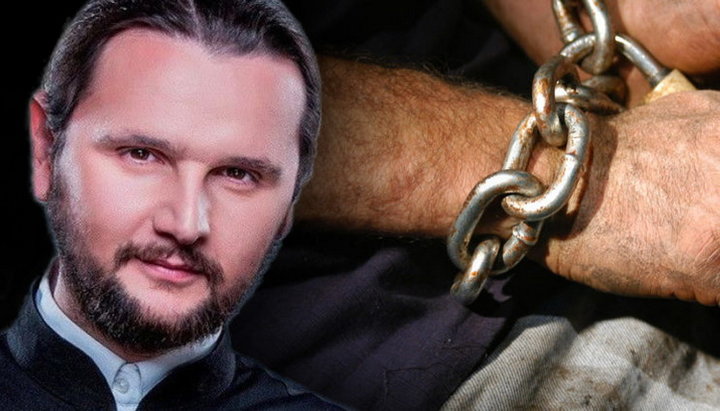
Archpriest Alexander Klimenko. Photo: news.church.ua
On July 4, 2020, Archpriest Alexander Klimenko, a clergyman of the Boryspil Eparchy of the UOC, spoke about slavery in ancient times and today, about the struggle against slavery of sin and the right attitude to those, weaker or poorer, who depend on us. The interview is published by the UOC Information and Education Department.
Commenting on Chapter 8 of the Gospel of Matthew (Matthew 8: 5-13), the cleric talks about slavery in ancient times and in the XXI century.
"Slavery was also in the time when Jesus Christ came to earth. Many people ask me a question with a claim to Christianity: "Why did Christ never openly fight against slavery?".
As you can see, now even at the level of legislation in almost all countries of the world slavery is prohibited, but it exists. Human trafficking is flourishing, and this is probably what God as a Prophet knew. He knew that the struggle against slavery was not so important as the attempt to change the person so that he/she couldn’t offend the neighbour, so that the person could see the image of God in the other – even if it is sometimes overshadowed, sometimes imperfect, but the image of God, and so that the person was treated with maximum reverence and affection. The Lord God, without saying a word against slavery, did much more so that slavery among Christians is perceived as an absolute mistake and an absolute evil," says the priest.
According to him, the Lord does not tell us about human slavery but about the slavery of sin: "He tells us that we should treat people in a different way – to love one another, as the Lord loved us, he tells us about grace, mercy, the heart’s purity, such things that exclude the treatment of another person as things".
Speaking of modern slavery, Fr. Alexander noted: "Slavery continues to walk world-wide. Young girls and women continue to be abducted from their families and sold for obscene activities. Entire countries, such as Thailand, where their religion – the so-called Thai Buddhism – suggests that being born into the body of a woman is a punishment for life in the past, and that is why parents sell their daughters into slavery to engage in prostitution. People are kidnapped when they go to wealthier countries to work, their passports are taken away and they themselves are forced to work in non-state labour camps somewhere in remote forests or mines. This is the case in Brazil, where hundreds of thousands, in fact, slaves, work in sawmills and coal mines for the steel industry. All this is done in secret, but we know that millions of people are aware of that.”
The priest told us how to treat those, weaker or poorer, who depend on us: "All those who may be at a lower stage of development or material well-being than we are now should be treated with care, as God's image".
"I wish each of you, dear brothers and sisters, always treat those whom the Lord sends us in our lives in a decent way. Love each other, respect each other, be humble before each other, and then the Lord will keep each of us. May today's Gospel change us, and we will not be the same as we were before," he concluded.
As reported, earlier the hierarch of the UOC said that now they protest against slavery in history but not slavery to sin.
Read also
Catholic media outraged by forcible conscription of Uniate cleric
The Vatican’s Apostolic Nunciature has demanded the return of a forcibly mobilized Greek Catholic cleric.
Rivne court fines man for criticizing parish's "transfer" to OCU
A resident of the Rivne region was convicted over Facebook posts criticizing the “transfer” of a religious community in the village of Butove to the OCU.
Novynskyi: I quoted the Gospel to Zelensky on first day of war
The former Ukrainian MP said he advised Davyd Arakhamia to begin negotiations with Russia in the first days of the full-scale war and later spoke with Volodymyr Zelensky.
Sumy Eparchy venerates miraculous Korsun-Shpylivka Theotokos Icon
Celebrations honoring the Mother of God’s icon known as the “Restorer of Sight” were held at Sumy Cathedral and concluded with a car procession around the city.
Receding Dniester in Khmelnytskyi region exposes foundation of flooded church
The foundation of St. John the Theologian Church, submerged during the construction of a hydroelectric power plant, has resurfaced for the first time in 45 years.
Medieval сhurch сrumbles as Culture Ministry сites missing agreement
The 14th–15th-century St. Nicholas Church in Chesnyky, Ivano-Frankivsk Region, is falling into disrepair.