UGCC clerics banned from political propaganda activity online
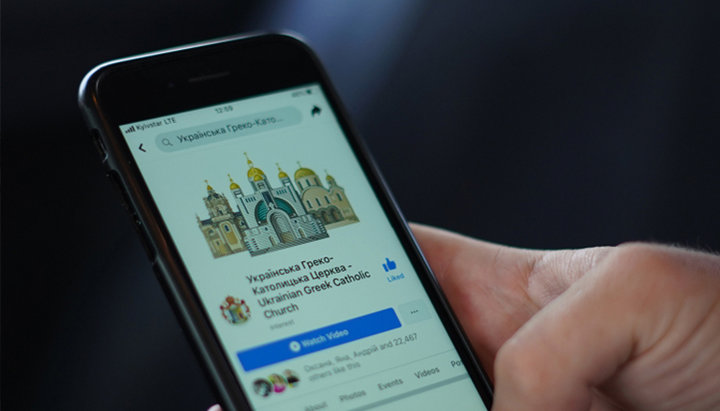
The clergy of the UGCC and the laity in church structures are forbidden to conduct political campaigning on the Web. Photo: news.ugcc.ua
On August 3, 2020, the Instruction on the online presenсe of church structures, institutions, clergy and monasticism of the UGCC came into force, which prohibits political campaigning on social networks. This was reported by the information resource of the UGCC.
The Instruction will operate on a probationary period of three years. It contains specific guidelines on the rules for personal profiles and profiles of institutions on social networks. Laymen who work in church structures are also obliged to comply with a significant part of the provisions of this document.
The Instruction prohibits the discussion on social networks of personal conflicts with other hierarchs, clergy or parishioners, as well as direct or indirect campaigning for a candidate, party or political bloc.
From now on, the clergy of the UGCC cannot urge the congregation to vote for a person or a party; nor can they thank candidates for donations, praise for the rally, or do anything that can push parishioners to vote for a particular person. Such actions, according to the Instruction, are considered to be indirect campaigning.
Uniate clergy can now take part in political talk shows only with the permission of their local hierarch. UGCC clerics are not recommended to hype these shows on their accounts.
Violation of certain norms of the document will entail criminal liability.
“Within 30 days from the date of entry into force of this Instruction, clergymen, monastics, church structures and institutions must adjust all profiles on social networks with the requirements of this regulatory document,” the authors of the document emphasized.
Earlier it became known that the UGCC had organized actions to support Euromaidan in Europe.
Read also
Khust Eparchy honors memory of St. Job of Uholka
A Liturgy is served in Mala Uholka, a birthplace of St. Job of Uholka, on the saint's feast day.
UOC parish in Cologne donates ultrasound machine to Kharkiv region hospital
In Cologne, UOC believers raised funds for an ultrasound machine for the Kehychivka district hospital in the Kharkiv region.
Shevchuk tells Pope Leo of Ukraine's preparations for "another harsh winter"
The head of the UGCC expressed "special gratitude" to the Pope for his phone calls with Putin and Zelensky.
Berlin hierarch comments on Phanar document published by UOJ-USA
Metropolitan Mark called the information about the 2018 "Unification Council" alarming if confirmed, and expressed hope that Patriarch Bartholomew will reconsider his position.
UOC marks Synaxis of All Saints of Volyn Land at Lutsk cathedral
Metropolitan Serhiy of Ternopil and Kremenets led the Liturgy on the feast day of the Lutsk cathedral of All Saints of the Volyn Land.
SBU detains OCU cleric who organized draft evader's escape for money
In Transcarpathia, law enforcement officers detained a clergyman of the OCU who arranged for a draft evader to be smuggled into Slovakia for $15,000.