ROC to Montenegrin authorities: Wise up and stop persecuting the Church
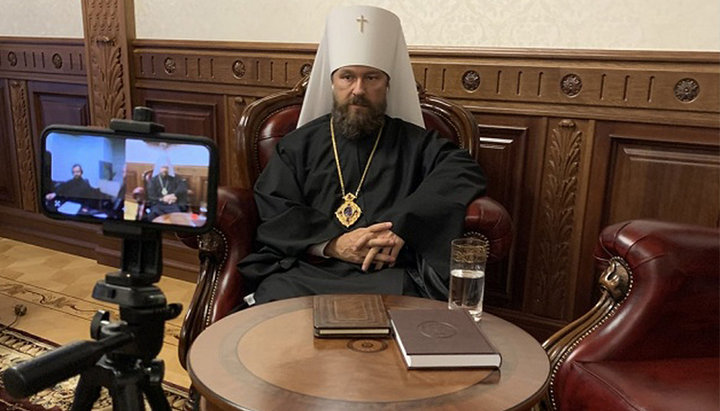
The head of the ROC DECR, Metropolitan Hilarion (Alfeyev) of Volokolamsk. Photo: mospat.ru
The Russian Orthodox Church calls on the authorities of Montenegro to wise up and stop persecuting the Serbian Orthodox Church, said the head of the Department for External Church Relations of the Russian Orthodox Church, Metropolitan Hilarion (Alfeyev).
“Our message is very simple: hands off the Orthodox Church. We are deeply convinced that those politicians who encroach on the Orthodox Church are committing an anti-popular action – they are going against their people. This is evidenced by tens of thousands of people who until recently have taken to the streets of Montenegrin cities ...>,” the website of the ROC DECR cites Metropolitan Hilarion. “Therefore, our message to the Montenegrin authorities is very simple: stop, wise up, stop the persecution of the Church that you have now unleashed.”
The bishop of the Russian Church recalled that teachers, military personnel, doctors and sailors spoke out in defense of the rights of believers of the canonical Church in Montenegro.
Metropolitan Hilarion recalled that even before the outbreak of the coronavirus pandemic, the Ambassador Extraordinary and Plenipotentiary of Montenegro to Russia brought the text of the anti-church law to the attention of the head of the ROC DECR ROC to prove the absence of discrimination against the Church.
“At a meeting with the Ambassador, I then said: you are creating conditions for the alienation of church property, for the possible transfer of church buildings to some other structures. This is a very dangerous path,” said Metropolitan Hilarion.
The head of the ROC DECR appealed to Montenegro’s authorities and drew their attention to the fact that they can receive the people’s support only if they do not go against the Church and back it.
Metropolitan Hilarion compared the religious situation in Montenegro to the situation in Ukraine and reminded Montenegrin politicians that the Tomos for the OCU did not help the former President of Ukraine Petro Poroshenko, who initiated the creation of a schismatic structure for his political interests, in the elections.
“Political leaders who are trying to stake on some church projects in their political pre-election struggle make a big mistake. Moreover, in this case we are not talking about the fact that the politician is trying to gain the support of the Church. On the contrary, for the sake of his political goals, he is trying to destroy the existing Church,” stressed the head of the ROC DECR. “That is, he does not like the Church that now exists in Montenegro, and he wants to create a new church. The Church and people are one. Maybe then the people should be replaced by some other people? I think that this is political shortsightedness and political adventurism."
Earlier, the President of Montenegro Milo Đukanović promised to seek the Montenegrin Сhurch until his last breath.
Read also
Lithuanian bishop: Ukraine is no model for believers' rights
Vicar of Vilnius Diocese voices concern over attempts to import Ukraine's religious conflict into Lithuania.
Hundreds of believers honor St. Alexis of Carpatho-Russia in Khust Eparchy
At the St. Nicholas Monastery in the village of Iza-Karputlash, Metropolitan Mark of Khust led a festive liturgy, concelebrated by six metropolitans, five archbishops and three bishops.
Court upholds UOC parish appeal in Voloshky over OCU switch dispute
The Northern Commercial Court of Appeal has upheld the appeal of the St. Nicholas parish of the UOC in the village of Voloshky, Volyn region, in a dispute over a transfer to the OCU.
Zelensky says 9.5M Ukrainians expected to return home from abroad
Zelensky stated that 9.5 million Ukrainians who left abroad are expected to return home to rebuild the country.
German theologian criticizes Ukrainian authorities' pressure on UOC
German theologian Regina Elsner has said that pressure from the authorities on the Ukrainian Orthodox Church places an additional heavy burden on believers during the war.
Poland bans entry to Lviv official over SS Galicia and UPA glorification
Polish Foreign Minister initiates entry ban on Lviv Regional Council deputy who proposed declaring 2027 the Year of the UPA.