Yan Taksiur taken to the Russian Federation on an exchange
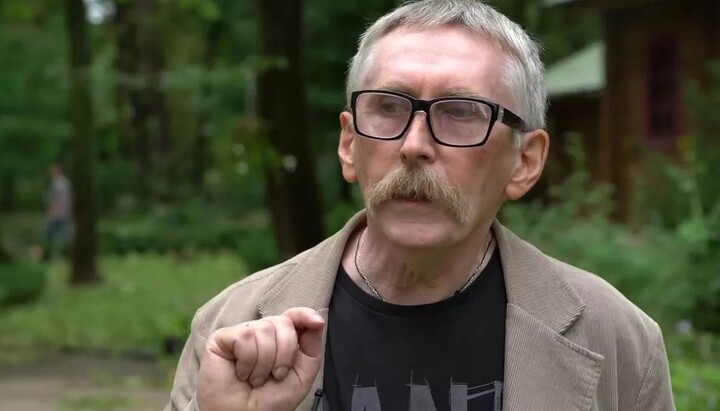
Yan Taksiur. Photo: screenshot of the video of the Pershy Kozatsky YouTube channel
Orthodox writer and publicist Yan Taksiur was taken to Russia on an exchange.
This happened the next day after he was delivered a verdict under the article "Treason" and sentenced to 12 years in prison by the Shevchenko Court of Kyiv.
The fact that Taksiur is in the Russian Federation is reported by the Pershy Kozatsky Telegram channel with reference to the writer’s relatives.
As the UOJ reported, on March 10, 2022, Yan Taksiur was detained by the SBU. For a long time he was in a pre-trial detention center, unable to receive legal and medical assistance. Yan Taksiur's daughter turned to the President with a request to save her father. After the first court hearings, Mariko stated that her father's case was "hastily concocted, with many blunders," and he was "tried for dissent." The sick writer was denied transfer to house arrest, but was later released on bail of UAH 1.2 million. In September 2022, he underwent surgery due to cancer.
Read also
Khust Eparchy honors memory of St. Job of Uholka
A Liturgy is served in Mala Uholka, a birthplace of St. Job of Uholka, on the saint's feast day.
UOC parish in Cologne donates ultrasound machine to Kharkiv region hospital
In Cologne, UOC believers raised funds for an ultrasound machine for the Kehychivka district hospital in the Kharkiv region.
Shevchuk tells Pope Leo of Ukraine's preparations for "another harsh winter"
The head of the UGCC expressed "special gratitude" to the Pope for his phone calls with Putin and Zelensky.
Berlin hierarch comments on Phanar document published by UOJ-USA
Metropolitan Mark called the information about the 2018 "Unification Council" alarming if confirmed, and expressed hope that Patriarch Bartholomew will reconsider his position.
UOC marks Synaxis of All Saints of Volyn Land at Lutsk cathedral
Metropolitan Serhiy of Ternopil and Kremenets led the Liturgy on the feast day of the Lutsk cathedral of All Saints of the Volyn Land.
SBU detains OCU cleric who organized draft evader's escape for money
In Transcarpathia, law enforcement officers detained a clergyman of the OCU who arranged for a draft evader to be smuggled into Slovakia for $15,000.