Memorial service for Mazepa held at Kyiv-Pechersk Lavra
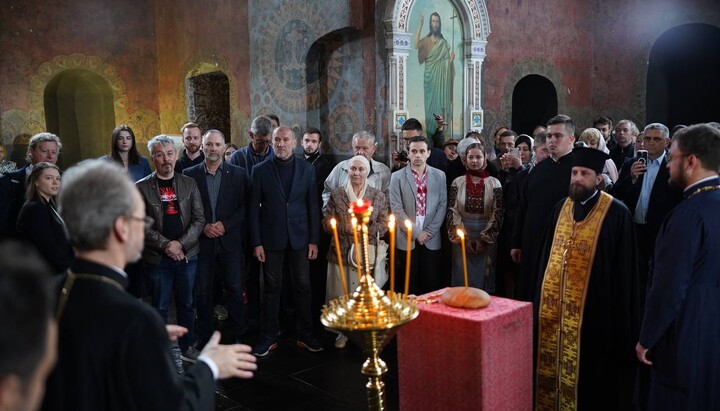
A memorial service for Mazepa. Photo: t.me/otkachenkokyiv
On 11 June 2023, a memorial service for Mazepa was held at the All Saints Church of the Kyiv-Pechersk Lavra, reports the Ministry of Culture Oleksandr Tkachenko on his Telegram channel.
"A historic day. For the first time in the history of the Kyiv-Pechersk Lavra, a memorial service was held for its benefactor and donator, Hetman Ivan Mazepa, who was anathematised by the Russian imperial Church while still alive for his unwillingness to obey moscovia," Tkachenko wrote.
"As promised, the Lavra is becoming Ukrainian. Prayers for prominent figures of Ukrainian history will now be performed within its walls," he added.
The memorial service was led by Avraamy Lotysh, banned in the UOC.
Read also
Kyiv conscription officers abduct UOC priest
TRC officers reportedly abducted Maksym Kostiuchenko, a cleric of a UOC church in the Ukrainian capital.
Court grants DESS lawsuit to dissolve UOC’s Rovenky Eparchy
The appeals court partially granted the DESS lawsuit seeking to dissolve the Rovenky Eparchy but rejected the request to seize its property, citing a gap in Ukrainian legislation.
Met. Meletiy consecrates house of worship for UOC community in Dankivtsi
Members of the persecuted UOC Intercession parish in Dankivtsi have converted a house into a place for communal prayer and worship services.
OCU eparchy sells church center site to developer for housing
The OCU’s Volyn Eparchy sold land intended for a spiritual center to a private developer planning to build townhouses and residential buildings.
SBU names UOC priest’s wife a suspect in Cherkasy region
The SBU accused Matushka Kateryna Prykotenko of “spreading enemy propaganda” through correspondence with parishioners.
UGCC cleric calls Russian Orthodox literature dangerous for clergy
While examining the causes of divisions within the UGCC, Yustyn Boiko concluded that Russian Orthodox literature had influenced Greek Catholic clergy.