Metropolitan Longin handed a second suspicion
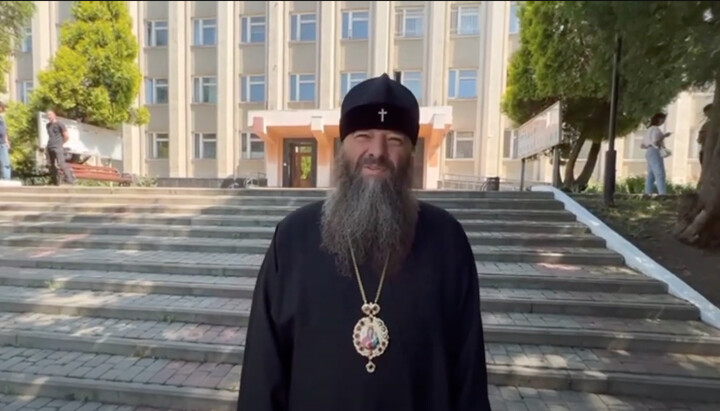
Metropolitan Longin. Photo: screenshot of the YouTube channel of the Bancheny Monastery
On July 13, 2023, Metropolitan Longin of Banchensk of the Ukrainian Orthodox Church was handed a second suspicion.
In a video posted on the YouTube channel of the Bancheny Monastery, Vladyka said that he would appeal to international human rights organizations:
“I think that I should seek (the protection of – Ed.) my rights somewhere further because in our state no one wants to protect us as citizens of Ukraine,” said Metropolitan Longin.
Vladyka added that at the moment he cannot pay for gas and electricity, "because they do not allow anyone to help me."
“Nevertheless, I think that the Lord will help us, the truth will prevail,” Metropolitan Longin summed up.
Earlier, the UOJ wrote that Metropolitan Longin of Bancheny was summoned for interrogation.
Read also
Met. Meletiy consecrates house of worship for UOC community in Dankivtsi
Members of the persecuted UOC Intercession parish in Dankivtsi have converted a house into a place for communal prayer and worship services.
OCU eparchy sells church center site to developer for housing
The OCU’s Volyn Eparchy sold land intended for a spiritual center to a private developer planning to build townhouses and residential buildings.
SBU names UOC priest’s wife a suspect in Cherkasy region
The SBU accused Matushka Kateryna Prykotenko of “spreading enemy propaganda” through correspondence with parishioners.
UGCC cleric calls Russian Orthodox literature dangerous for clergy
While examining the causes of divisions within the UGCC, Yustyn Boiko concluded that Russian Orthodox literature had influenced Greek Catholic clergy.
UOC will play major role in achieving peace, says Vadym Novynskyi
UOC Protodeacon Vadym Novynskyi believes the Church will help bring about reconciliation within Ukrainian society after the war ends.
Catholic media outraged by forcible conscription of Uniate cleric
The Vatican’s Apostolic Nunciature has demanded the return of a forcibly mobilized Greek Catholic cleric.