Trump considers himself second most popular in the world after Christ
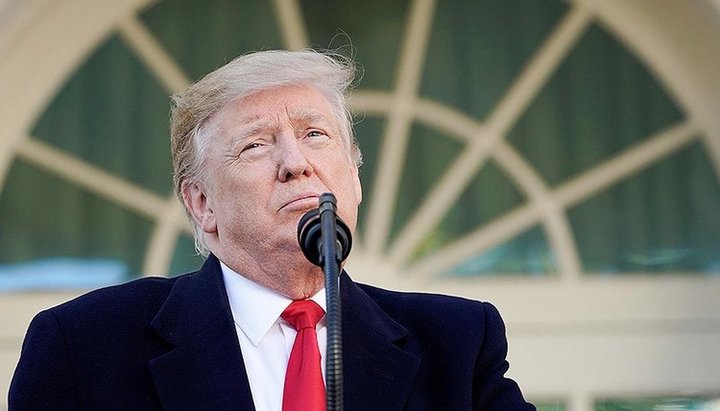
U.S. President Donald Trump. Photo: iz.ru
U.S. President Donald Trump at a rally in Greenville, North Carolina, said that he was second only to Jesus Christ in popularity, Interfax reports.
“Someone once said to me, ‘You are the most famous person in the world at the moment.’ I replied that it was not so. And my interlocutors asked, ‘But who is more famous?’ And I said, ‘Jesus Christ’," Trump said.
The U.S. President added that "if you look at the sky, it becomes clear that He (Jesus Christ – Ed.) is leading by a wide margin."
According to the publication, Trump has already recovered from the coronavirus disease. He has been travelling around the states almost every day and holding campaign rallies.
The U.S. presidential election will take place on November 3, 2020. Donald Trump hopes for re-election. His rival is a Democrat – former U.S. Vice President Joe Biden.
Earlier, the UOJ reported that Trump called his coronavirus infection "a blessing from God".
Read also
Rivne court fines man for criticizing parish's "transfer" to OCU
A resident of the Rivne region was convicted over Facebook posts criticizing the “transfer” of a religious community in the village of Butove to the OCU.
Novynskyi: I quoted the Gospel to Zelensky on first day of war
The former Ukrainian MP said he advised Davyd Arakhamia to begin negotiations with Russia in the first days of the full-scale war and later spoke with Volodymyr Zelensky.
Sumy Eparchy venerates miraculous Korsun-Shpylivka Theotokos Icon
Celebrations honoring the Mother of God’s icon known as the “Restorer of Sight” were held at Sumy Cathedral and concluded with a car procession around the city.
Receding Dniester in Khmelnytskyi region exposes foundation of flooded church
The foundation of St. John the Theologian Church, submerged during the construction of a hydroelectric power plant, has resurfaced for the first time in 45 years.
Medieval сhurch сrumbles as Culture Ministry сites missing agreement
The 14th–15th-century St. Nicholas Church in Chesnyky, Ivano-Frankivsk Region, is falling into disrepair.
Poland сondemns Lviv Regional Council's decision to declare 2007 year of UPA
Polish Prime Minister Donald Tusk says the Lviv Regional Council's decision to dedicate 2027 to the UPA and Roman Shukhevych is harmful to Ukraine.