Processionist: Activists are cursing us while our husbands are dying
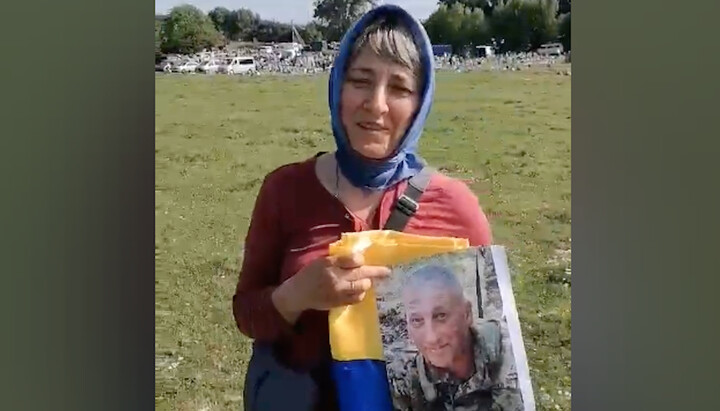
A participant of the religious procession. Photo: UOJ
A resident of the village of Zhvanets, Kamyanets-Podilsky district, Khmelnytsky region, whose husband died at the front, told about the curses of "activists" in the address of the religious procession.
The woman is going to the Pochaiv Lavra carrying a photo of her husband and the flag of Ukraine. According to her, the flag from the Ukrainian President was handed to her by representatives of the military commission.
She also spoke about the reaction of "activists" to the procession: "While I was walking, there were many such situations, obstacles, that we could not go... There were people who shouted: to war, down with the Moscow priest, Moscals, let your children be cursed... For what? Why did my husband die? There are so many children like that (dead – Ed.)... I see mothers in black scarves, crying that their children were killed... It's just terrible".
As reported, the Ternopil Regional Council banned the procession of the UOC in the region.
Read also
Upper Lavra court hearing postponed
The next court hearing in the Upper Lavra case has been scheduled for November 3.
UOC priest blesses ambulances at Kamianske medical center
A UOC priest in Kamianske blessed ambulances for a medical facility and wished its doctors God's help in their work.
Dumenko to German ambassador: Law targeting UOC also applies to other groups
Epifaniy Dumenko sought to defend Ukraine’s law restricting religious organizations during a meeting with the German ambassador.
Activists bused to court hearings in UOC cases, media say
A minibus has been spotted transporting protesters to and from courthouses where UOC cases are being heard.
Firefighters save historic UOC church from fire in Zakarpattia
A fire broke out at a UOC church in the Tiachiv district, damaging the altar and church furnishings.
Volyn Eparchy faithful collect six tons of aid for Sviatohirsk Lavra
Believers in Volyn collected food and warm clothing for people displaced by the war who have found shelter at Sviatohirsk Lavra.