American lawyer warns Rada MPs about sanctions for banning UOC
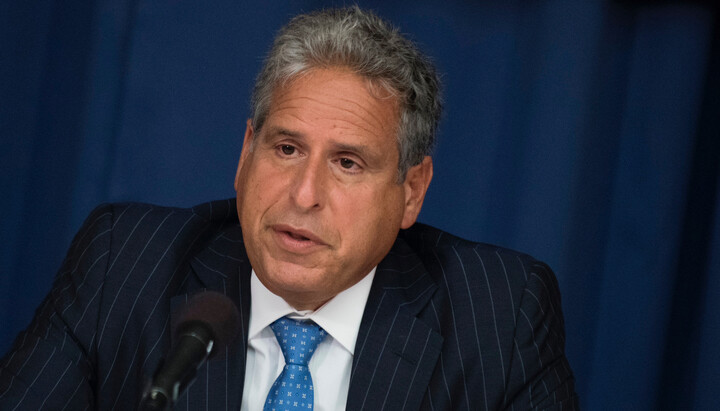
Robert R. Amsterdam. Photo: t.me/stranaua
On October 24, 2023, the lawyer of the Ukrainian Orthodox Church, American lawyer Robert R. Amsterdam warned the MPs of Ukraine about sanctions that could be applied to them if they pass bill 8371, the Strana website reports.
The letter is addressed to VR Chairman Ruslan Stefanchuk, 1st Deputy Chairman Oleksandr Kornienko, 2nd Deputy Chairwoman Olena Kondratiuk, and deputies of the Verkhovna Rada of Ukraine. Under the letter, if the MPs vote for bill 8371, they may be exposed to sanctions and criminal prosecution in foreign countries.
According to Robert R. Amsterdam, bill 8371, adopted in the first reading, violates the human right to freedom of religion.
The UOC lawyer writes that Ukraine’s key allies, including the US, EU and UK, regularly impose individual sanctions against those responsible for human rights violations.
“In addition, some countries committed to upholding human rights bring criminal charges against the perpetrators of human rights abuses in their own courts under the principle of universal jurisdiction. Members of the Verkhovna Rada who continue to support this legislation may someday find themselves in a foreign court facing criminal conviction,” Bob Amsterdam warned.
The UOJ publishes the full text of the document.
AMSTERDAM & PARTNERS LLP
LONDON WASHINGTON
Ruslan Stefanchuk
Chairman, Verkhovna Rada Ukrainy
Oleksandr Kornienko,
1st Deputy Chairman, Verkhovna Rada Ukrainy
Olena Kondratiuk,
2nd Deputy Chairwoman, Verkhovna Rada Ukrainy
Deputies of the Verkhovna Rada Ukrainy
October 24, 2023
Chairman Stefanchuk, Deputy Chairman Kornienko, Deputy Chairwoman Kondratiuk, and Deputies of the Verkhovna Rada Ukrainy:
The vote of 267 members of the Verkhovna Rada in favor of draft law 8371 on Friday, October 20th is a grave violation of international human rights law that could have serious consequences both for Ukraine’s sovereignty and for you personally. As you know, draft law 8371 in essence bans the Ukrainian Orthodox Church (UOC) from the territory of Ukraine. In so doing, it violates the internationally protected right of the freedom of religion. Before the law undergoes a second reading, I write to make you aware of applicable international law and the consequences of your support for this dangerous bill.
If enacted, this legislation would deny the Ukrainian people of one of the most basic human rights—the freedom of religion. It would require people of one faith to abandon their church and instead worship under the government’s preferred branch of Orthodoxy—the newly established Orthodox Church of Ukraine (OCU). Telling people how they must worship is blatantly inconsistent with international human rights.
Ukraine has entered into solemn international legal commitments to respect and preserve international human rights, including the freedom of religion. This guarantee has its origins in the aftermath of WW2, which saw the last time a significant religion was banned anywhere in Europe. The Universal Declaration of Human Rights, proclaimed by the United Nations General Assembly in 1948, binds all countries as a matter of customary international law and guarantees: "Everyone has the right to freedom of thought, conscience and religion; this right includes freedom to change his religion or belief and freedom, either alone or in community with odiers and in public or private, to manifest his religion or belief in teaching, practice, worship and observance."
The International Covenant on Civil and Political Rights, which Ukraine ratified on November 12,1973 requires that Ukraine “respect and to ensure to all individuals within its territory and subject to its jurisdiction... the right to freedom of thought, conscience and religion. This right shall include freedom to have or to adopt a religion or belief of his choice, and freedom, either individually or in community with others and in public or private, to manifest his religion or belief in worship, observance, practice and teaching."
Significantly, no derogation from this absolute commitment is permissible, even in time of war or other national emergency.
Article 9 of the European Convention of Human Rights, which Ukraine ratified on July 17, 1997, obligates Ukraine to "secure to everyone within [its] jurisdiction the right to freedom of thought, conscience and religion," including the freedom "either alone or in community with others and in public or private, to manifest his religion or belief, in worship, teaching, practice and observance."
Draft law 8371 violates these most basic commitments of the Ukrainian nation. It privileges a state- selected and backed branch of Orthodoxy by banning the preferred institution of worship of millions of Ukrainians. There is no justification that can relieve Ukraine of these binding legal commitments. Neither historical religious ties nor the possibility of foreign influence can override the freedom of religion. In a democratic society, it is not for the state to judge canonical links to other branches of Orthodoxy or to invoke national security without justification No evidence has been presented that would demonstrate foreign control of the Ukrainian Orthodox Church
At the time the Orthodox Church of Ukraine (OCU) was granted Tomos by Ecumenical Patriarch Bartholomew I, then President Poroshenko made a firm commitment to protect the freedom of religion of all Ukrainians. Speaking at a press conference after the establishment of the new church, he indicated that "it is not the business of secular authorities to determine" where and how people should worship. To do so would "violate interfaith relations.... and can completely discredit the idea of creating a local church." He committed that the government would "take a neutral position" and "be categorically against any effort to privilege the OCU over the UOC. Today, the Verkhovna Rada must live up to those promises.
Passage of this law could have grave consequences for Ukraine's sovereignty and political future. Since Russia's invasion, Ukraine has relied on the UN Charter and other rules of international law affirm its independence. Ukraine's violation of international law by banning a church would render Ukraine in pari delicto, undercutting its ability to invoke intemational law against Russia. Maintaining the legal and moral high ground is absolutely essential to Ukraine's self-defense and independence.
Further, passage of draft law 8371 undermines Ukraine's candidacy to join the European Union. The Copenhagen Criteria for EU membership "require that the candidate country has achieved stability of institutions guaranteeing democracy, the rule of law, human rights and respect for and protection of minorities." To be admitted to the EU, a country must comply with the European Convention on Human Rights, including the freedom of religion. This legislation would render Ukraine inadmissible to the EU, again undermining the country's future prospects.
Your support for this legislation may also render you personally liable for violating the human rights of your own people. Key allies of Ukraine, including the US, the EU and the UK, routinely impose individual sanctions on the perpetrators of human rights violations far less egregious than those contained in draft law 8371. Such sanctions typically range from travel bans to the freezing or seizure of assets, and can have profound impact on the lives and finances of those responsible. In addition, some countries committed to upholding human rights bring criminal charges against the perpetrators of human rights abuses in their own courts under the principle of universal jurisdiction. Members of the Verkhovna Rada who continue to support this legislation may someday find themselves in a foreign court facing criminal conviction.
As the second reading of draft law 8371 approaches, you and the Verkhovna Rada have a stark choice. You may denounce this legislation, and uphold international law by preserving the right of freedom of religion of your own people. Or you may support the bill, violating one of the most basic human rights and, in so doing, undermine Ukraine's political future and expose yourself to sanctions or even criminal prosecution. The choice should be very clear.
Robert R. Amsterdam
Founding Partner
AMSTERDAM & PARTNERS LLP
Earlier, the UOJ wrote that, according to Bob Amsterdam, Zelensky is destroying the UOC in order to take the populist vote in the upcoming elections.
Read also
SBU told Phanar many UOC bishops would join OCU in 2018, report says
According to a Phanar representative’s account, Ukrainian security services told the Constantinople delegation that many UOC representatives were prepared to attend the OCU’s “Unification Council.” In the end, only two did.
Catholic cardinal visits Ukrainian POWs during trip to Russia
During three days of consultations in Moscow, Cardinal Matteo Zuppi discussed prospects for ending the war in Ukraine.
Ukrainians help restore Serbian Orthodox church in Paris
Orthodox Ukrainians have become regular parishioners of St. Sava Church in Paris and have taken part in its restoration.
Bulgarian Church clergy and laity oppose Phanar head’s visit
More than 2,000 clergy and laity have called for the Ecumenical Patriarch’s visit to be canceled, citing disagreement with his actions and concerns that the visit could legitimize schism.
Unknown intruders break down doors at two UOC churches in Sloviansk
Archbishop Paisiy said OCU activists are suspected of breaking into the churches in Sloviansk, and police have launched an investigation.
Sviatohirsk Lavra prays for murdered monk on 40th day after death
The brethren of the Sviatohirsk Lavra held a memorial service for murdered Monk Varsonofiy, calling on the faithful to pray for the newly departed monk.