MP: No one talks anymore on bringing the UOC ban bill to parliament floor
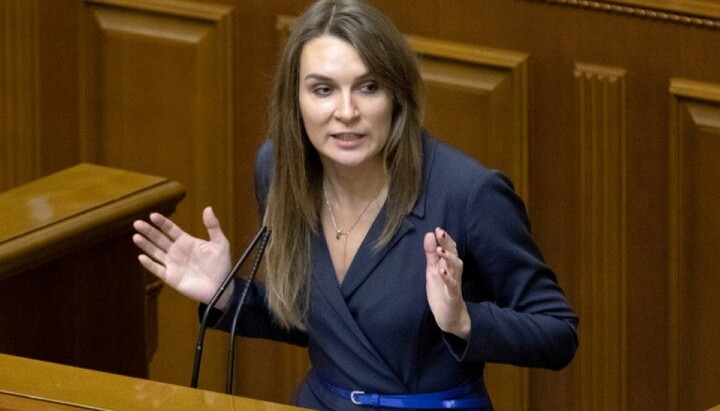
People's Deputy from the "Voice" faction Solomiya Bobrovska. Photo: dsnews.ua
MP from the "Voice" faction Solomiya Bobrovska complained that in the Verkhovna Rada, there is no longer a discussion about plans to bring bill No. 8371 on the ban of the UOC to a vote in the second reading. She stated this in an interview with "Telegraf".
According to her, the bill banning the UOC was "hanging by a thread", but after more than a thousand amendments were made and demands to check the document in the Venice Commission, its consideration is in question.
As reported by the UOJ, human rights activist Oleg Denisov stated that the law on the ban of the UOC contains formulations that violate human rights.
Read also
OCU activist admits breaking into UOC church in Sloviansk
Oleksandr Onyshchenko said that the OCU held its first "service" at the Seraphim Church, which had previously been broken into by forcing the locks and doors.
Archimandrite Ioustinos, longtime keeper of Jacob's Well, dies in Jordan
Archimandrite Ioustinos (Mamallos), the keeper of Jacob's Well in Nablus, has died after a prolonged illness.
Pilgrim group from Kyiv Theological Seminary visits Mount Athos
KTS students are making a pilgrimage to the holy sites of Romania, Greece, Mount Athos and Italy.
UOC cathedral celebrates its patronal feast in Ternopil
The service in the cathedral of the Holy Martyrs Faith, Hope, Love and their mother Sophia was led by Metropolitan Serhii of Ternopil, concelebrated by four hierarchs.
MinCulture marks centenary of Soviet-era reserve at Lavra's Refectory Church
Representatives of the Ministry of Culture presented awards to the Reserve's employees on the occasion of the anniversary at the Refectory Church of the Lavra.
Conference to mark 1700th anniversary of Christianity adoption held in Georgia
In Georgia, representatives of the Church and the state noted the defining role of Christianity in the country's cultural development.