Christmas reflections on politics, the Church and the Nativity of Christ
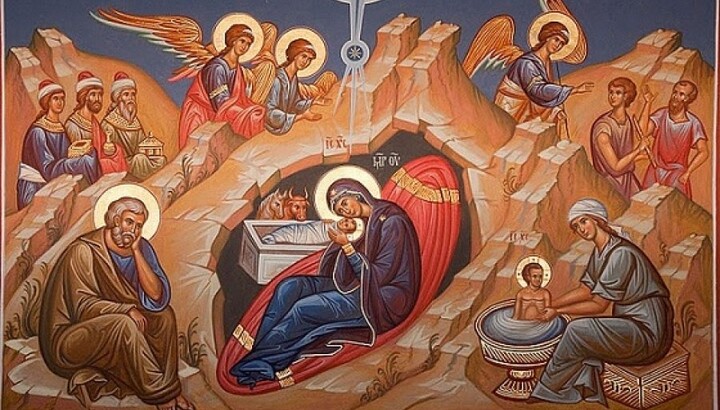
The Nativity of Christ. Photo: wikipedia.org
Year after year, the same thing happens: as soon as the Christmas Fast begins, a whirlwind of controversy arises around the date of the Nativity of Christ celebration. Indeed, this time something new has been added, as it is the first time Ukraine has celebrated Christmas in a more "European" manner.
However, this has helped little, except that a rather unpleasant imbalance has become clearer. It is not because the date of the Christmas celebration continues to be a subject of debate; nowadays, we argue about everything, with or without reason, just out of love for the argument. And it's not that the authorities are openly trying to impose their erroneous vision on a considerable number of their fellow citizens. You can’t expect anything from power players: throughout the Church's centuries-old history, few rulers have resisted the temptation to "exploit" the religious aspect of the country's life if such an opportunity arose.
The trouble is that one of the main, key events of world history, the celebration of the Savior's advent into the world, is perceived by society, first of all, as a means of expressing a certain position. That is, it is not the Nativity of Christ but someone's principles, beliefs and opinions – everything that, as Frederick Buechner aptly put it, substitutes God for people – is at the forefront.
This phenomenon is extremely unpleasant, but it is quite natural. Although our state has always been secular, Ukrainian society has never been devoid of faith. Needless to say, even the Soviet authorities acknowledged the common religiosity of Ukrainians. However, there came a moment when faith began to be gradually squeezed out of the spheres of public life, not confronted but subtly pushed to the periphery of societal existence and human consciousness.
Thus, we have obtained a modern civil society: active, passionate and thoroughly secular. It acknowledges a specific place for faith (I hesitate to say "religion"), assimilating it with particular functions and, of course, deeming itself entitled to dictate terms to believers and point out the Church's place.
Whether we have carried out our mission well or poorly over the past thirty years, we cannot go against reality – we reaped what we sowed.
At this point, it would be prudent for us to reflect, to think about what is happening, to take into account past mistakes and channel efforts in the right direction. Unfortunately, we are currently witnessing quite different processes. Having formed and strengthened, the society began to ask the Church questions that are now commonly referred to as uncomfortable. But in fact, they are not uncomfortable but incorrect because they are shaped based on the principles, positions, beliefs, and ideas that society lives by.
As a result, the Church started speaking about everything, even when not asked and began forming its own "position" on various issues, expressing diverse "opinions" in the hope that what is said will be heard, understood and not judged.
The Church of Christ, any of whose members, from bishop to layman, can rightfully afford the luxury of "knowing nothing but Jesus Christ and Him crucified" (1 Corinthians 2:2), has suddenly taken a stance on politics, public life and whatever else. You say, what's wrong with that? You say we live among people and have to answer their questions? You say we are responsible for our society and therefore we should have a dialogue with it? What nonsense!
Who is not talking or writing about war, politics and public life these days? You can learn about it everywhere; it is easy to talk to everyone about it. You want to know – open the Internet, you want to hear an assessment – start a conversation with anyone from your wife or neighbour to a work colleague or a random passer-by.
None of us suffer from a shortage of such information. Why seek answers to such questions from the Church? How do we know? Leave us to what is rightfully ours: ask us about God and faith, about virtue and sin, about the human soul and the Kingdom of Heaven, about the Holy Scriptures and prayer.
There are numerous topics that only the Church can truly reveal. Let's talk about that. Leave politics to politicians, war to the military, public life to activists and crime to law enforcers.
It is not our business to dive into this; it is our right not to look into it and not to talk about it. Please, stop this talk about dialogue with society. There is no dialogue with society, there has never been, and there can never be. Dialogue is possible only with an individual, not with the collective and impersonal. And the person usually comes to church not to "hear a position". The individual comes to God, to the environment where He acts directly and immediately, in a space where immortality and otherness reign, where, in the words of Julien Green, "everything is there, everything is different".
Accordingly, what draws a person to the Church is not a "clear position," but the experience of God's action in their soul, a deeply personal experience that only the Church can impart to those who come in search of Truth, not worldly truth.
Yes, these are few in thousands, but, believe me, these few are worth thousands. Especially when thousands persistently and deliberately prefer their human truth to Divine Truth.
Meanwhile, Truth is Christ, now born into the world. And as we well know, truth does not need proof. So, let’s stop arguing. After all, truth is not imposed; it is accepted. Completely and unconditionally. And those who see nothing but positions and principles in the birth of Christ simply passed by the Truth. Perhaps, they even saw Her, but they passed by and remained untouched by Her.
They have the right to do so. It would only be desirable for us, Orthodox Christians, not to trade Truth for various trivialities. Not to engage in debates, disputes, proofs, opinions and position formulation.
And if we have not succeeded so far, the Nativity of Christ is a wonderful occasion to make a good beginning.
Read also
A lesson from a speechless donkey
The famous seer struck his donkey three times for refusing to go forward. All the while, she was saving his life – and seeing what he could not.
The time when the soul ripens
Modern society has turned youth into a cult and old age into a period of merely “living out one’s days.” The Christian perspective reveals the profound spiritual meaning of our later years.
Faith is not a checker piece in a spectator sport
Arguments about faith on social media increasingly resemble no-holds-barred fights. We turn to a saint who, sixteen centuries ago, knew how to speak to those interested only in turning theology into a combat arena.
The metropolitan who fought with a pen
St. Cyprian of Kyiv was robbed, expelled, and barred from his see. He answered with letters, books, and canons – and before his death, forgave everyone.
Loneliness under one roof
Spouses can share a home for years, raise children, and faithfully attend church – yet remain strangers to each other.
The cross – the deepest healing of the human soul
Emotional exhaustion and anxiety have become a way of life. Ancient Christian tradition offers an unexpected way out – embracing one's own cross.