Expert: We remember how “transitions” that OCU wants to activate were made
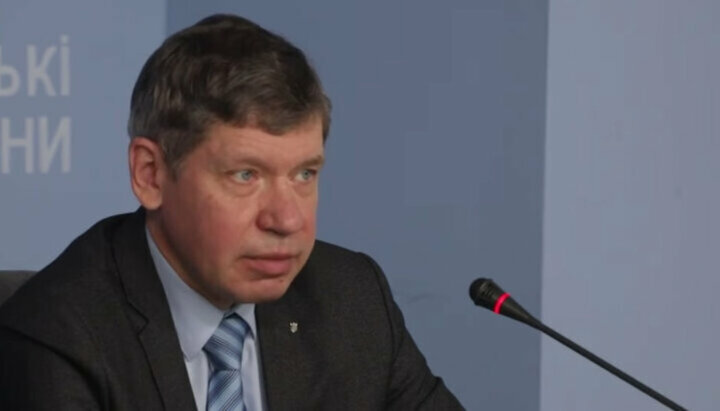
Yuri Reshetnikov. Photo: pravfond.ru
Yuri Reshetnikov, a specialist in the field of state-church relations and ex-chairman of the State Committee for Nationalities and Religions, recalled how many "transitions" of religious communities to the OCU were made and explained what the activation of this process can lead to.
In a commentary for the UOJ, the expert noted that the topic of "transitions" raised at the meeting of Epiphany with US Secretary of State Antony Blinken testifies to the desire "using the levers of external pressure on Ukraine, on the Ukrainian authorities to force the authorities or directly religious structures to join the OCU".
“As we see it and know a lot of cases – illegal re-registration of religious communities from the UOC to the OCU when decisions on church affiliation are made not by the community, but by some village gatherings, meetings of the territorial community or someone else. The point is to somehow activate, stimulate this process,” he added.
According to Reshetnikov, in this situation one can see not only an encroachment on the freedom of conscience and the right of believing citizens and religious communities to determine their own religious affiliation but "an encroachment on the sovereignty of the Ukrainian state since it is directly said about an attempt to increase the influence of one of the foreign states".
“I sincerely want to hope that the current Ukrainian government is guarding the sovereignty of our state and the observance of constitutional rights and freedoms of citizens, and it will be resistant to any outside influences, regardless of whether this influence is from one side or the other. That the current Ukrainian government will defend precisely the interests of Ukraine, the interests of its citizens, the interests of preserving internal peace, stability and public peace, and harmony.
Because it is quite obvious that any attempts to artificially intensify the process of "transitions" of communities – in fact, communities do not want to join anyone – will encounter the completely obvious, understandable, and logical resistance of believing citizens, the faithful to the Church, who will defend their rights, their temples. And I think that having so many existing objective challenges, both external and internal, from military aggression to the COVID pandemic, artificially creating additional challenges to the stability of the state is, to put it mildly, not wise, but if to say more – then it is criminal in relation to the future of our state,” resumed Yuri Reshetnikov.
As the UOJ wrote earlier, according to Reshetnikov, the biggest obstacle to "transitions" to the OCU is the reluctance of believers.
Read also
Lionel Messi thanks God for his achievements as he ends international career
Argentine football star Lionel Messi credited God for his success as he brought his international career to a close, saying he could never have achieved so much without God's will.
Odesa’s St. Elijah Monastery honors memory of its founder
Metropolitan Agafangel led celebrations at St. Elijah Monastery in Odesa on the feast day of St. Gabriel of Mount Athos.
OCU cleric rejects suspension, accuses ruling bishop of usurping power
An OCU cleric called the decree suspending him "canonically null and void" and accused "Bishop" Semanchuk of attempting to seize parishes and using mobilization threats as blackmail.
Supreme Court: Religious beliefs do not exempt citizens from mobilization
The Supreme Court has clarified that Ukrainian law does not provide for alternative civilian service under martial law.
Ukraine birth rate drops 17%, demographer says
The head of a department at Ukraine’s Institute of Demography has reported a sharp decline in the country's birth rate.
Khust Eparchy honors memory of St. Job of Uholka
A Liturgy is served in Mala Uholka, a birthplace of St. Job of Uholka, on the saint's feast day.