Dumenko claims that he does not consider Sviatohirsk Lavra as a Lavra
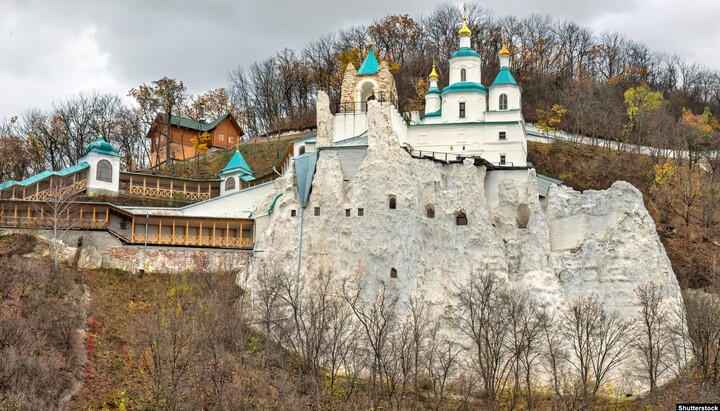
Sviatohirsk Lavra. Photo: Radio Liberty
The head of the OCU, Epifaniy Dumenko, in an interview with Radio Liberty, stated that it is believed within his structure that Ukraine has two, rather than three monasteries with Lavra status.
"It's the Kyiv-Pechersk Lavra and the Pochayiv Lavra because the Lavra status of the Sviatohirsk Monastery was granted during Yanukovych's rule. And it was at his request that Moscow elevated the status of this monastery to Lavra. But historically, it has never been a Lavra. Historically, we can speak of the existence of two major Ukrainian Lavras. These are the Kyiv Lavra and the Pochayiv Lavra," he stated.
At the same time, he claimed that both Lavras will eventually be incorporated into his structure, and that it's just a matter of time.
As reported by the UOJ, on April 25, the Donetsk Regional Prosecutor's Office announced that a court had selected a measure of restraint for Metropolitan Arseny, the abbot of the Sviatohirsk Lavra, viz. detaining the UOC hierarch for 60 days without the right to bail.
Read also
OCU cleric's church preference poll delivers unexpected results
When an OCU cleric from Rivne asked Ukrainians which Church they preferred, most Threads users who responded chose the UOC.
Reports to SBU of weapons in UOC churches were always false, Novynskyi says
The protodeacon said that under Maliuk, inspections began to be accompanied by public accusations against the Church without evidence.
Culture Ministry pledges to speed up seizure of Kyiv-Pechersk Lavra from UOC
Culture Minister Tetiana Berezhna has pledged to personally attend a court hearing in the Kyiv-Pechersk Lavra case.
Kamianske Eparchy honors Dnipro Icon of the Mother of God for first time
A festive service was held at a cathedral in Kamianske, where the Dnipro Icon of the Mother of God was brought out for veneration by the faithful for the first time.
Kyiv conscription officers abduct UOC priest
TRC officers reportedly abducted Maksym Kostiuchenko, a cleric of a UOC church in the Ukrainian capital.
Court grants DESS lawsuit to dissolve UOC’s Rovenky Eparchy
The appeals court partially granted the DESS lawsuit seeking to dissolve the Rovenky Eparchy but rejected the request to seize its property, citing a gap in Ukrainian legislation.