DESS says which denomination has most communities and monasteries
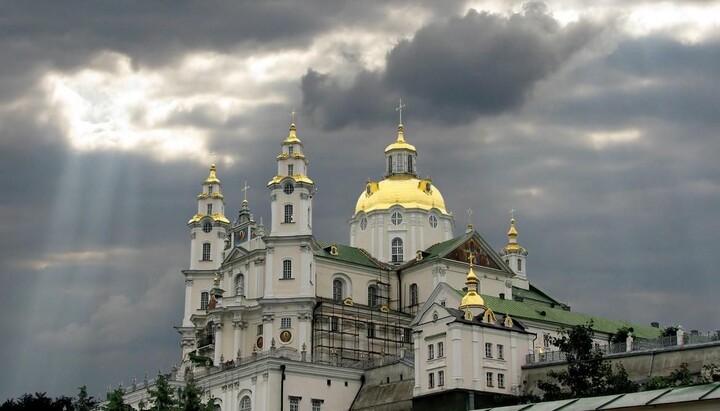
The Pochaiv Lavra. Photo: Channel 24
The State Service of Ukraine for Ethnopolitics and Freedom of Conscience (DESS) has revealed data on the number of religious communities, monasteries and religious schools in Ukraine, reports Risu.
The Ukrainian Orthodox Church has the largest number of religious communities – 29%, 22% belong to the OCU, and about 10% of communities belong to the UGCC. By the number of monasteries, the UOC is the leader – 39%, 22% belong to the Roman Catholic Church, 20% belong to the UGCC, the OCU is said to be in the 4th place, but the number of monasteries is not specified.
In total, there are communities of more than 90 different religious denominations and movements in Ukraine. As of 1 January 2004, there were 36,195 religious communities, 552 monasteries and 201 religious schools. The largest number of religious communities and monasteries is in the Lviv region.
As reported by the UOJ, earlier the DESS head stated that the ban of the UOC would not violate the rights of its believers.
Read also
Ukraine must have its own faith: Poroshenko's party lays out peace terms
Poroshenko’s party European Solidarity described church policy as a matter of national sovereignty and said there can be no compromises in this area.
432 UOC churches damaged in Ukraine during war, report says
According to the Religion on Fire project, 807 religious buildings in Ukraine have been damaged or destroyed as a result of hostilities.
DESS official gives number of clergy exempt from mobilization in Ukraine
A DESS representative said the actual number of clergy exempt from mobilization is significantly lower than the number of religious organizations designated as critical.
Cabinet keeps gas prices unchanged for religious organizations
The Cabinet has fixed gas prices for religious organizations through the end of the 2026–2027 heating season.
Concert held at seized Cherkasy cathedral
The OCU thanked the musical ensemble for choosing the Cherkasy cathedral as the venue for a Baroque music concert.
OCU activist admits breaking into UOC church in Sloviansk
Oleksandr Onyshchenko said that the OCU held its first "service" at the Seraphim Church, which had previously been broken into by forcing the locks and doors.