Dumenko discusses role of Church in war with French Ambassador
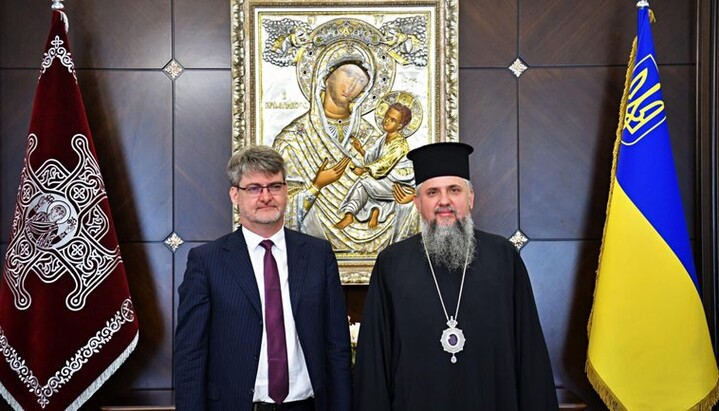
Head of the OCU and French Ambassador. Photo: OCU
Epifaniy Dumenko, head of the OCU, met with French Ambassador Gaël Veyssière, reports the OCU press service.
The meeting covered France's support for Ukraine, the social and religious situation in the country, the role of the Church in Ukrainian society, the service of chaplains in the army, "the aggressor's attempt to use the Church and religious issues to achieve its own expansionist goals," and several other topics of mutual interest.
As the UOJ reported, Dumenko previously discussed the religious situation in Ukraine with the head of Ukrzaliznytsia.
Read also
Cherkasy ruling bishop details authorities’ plan to take over UOC cathedral
Metropolitan Theodosiy says authorities and the OCU are seeking to legalize the cathedral seizure in three steps: canceling its ownership registration, declaring it ownerless, and transferring it through the courts.
Dnipropetrovsk metropolitan offers condolences after deadly strike
Metropolitan Ireney expressed condolences to the families of those killed in the strike on Dnipro railway station and called for prayers for the wounded.
TRC officers beat and abduct UOC archimandrite in Kharkiv
Military recruitment officers and police allegedly abducted Archimandrite Volodymyr (Subbota), beating him and parishioners who tried to protect the monk.
Volyn Eparchy bids farewell to fallen soldier, son of UOC priest
Archbishop Athanasiy of Kamin-Kashyrskyi officiated at the funeral of Archpriest Feodor Sihnaievskyi’s son, who was killed in the war.
Metropolitan Ireney consecrates Refectory Church at Dnipro monastery
Metropolitan Ireney presided over the Great Consecration of a church and celebrated the Divine Liturgy at the Tikhvin Convent in Dnipro.
Official accuses Russians of stealing “Ukrainian saint” Demetrius of Rostov
Roman Malenkov claimed that Russians appropriated the “Ukrainian saint” Demetrius of Rostov because of their own “cultural and theological poverty.”