Head of OCU on Bill 8371: Let's pass an imperfect law and improve it later
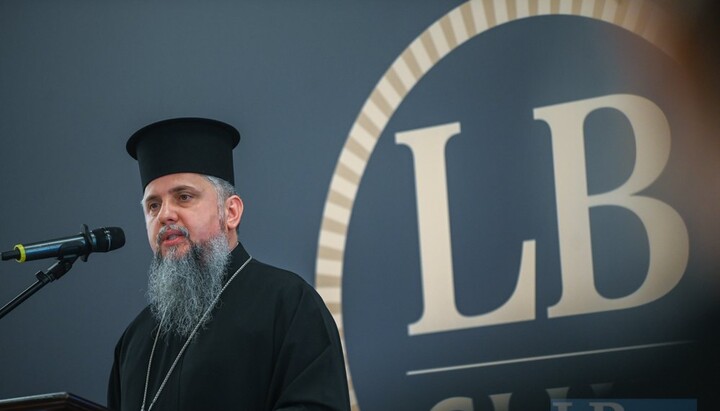
Photo: Epifaniy Dumenko. Source: LB.ua
The head of the Orthodox Church of Ukraine (OCU), Epifaniy Dumenko, proposes the immediate adoption of bill 8371, which would effectively ban the activities of the Ukrainian Orthodox Church (UOC) in Ukraine, as it is better "to have an imperfect law that can later be improved than to have none at all," reports LB.ua.
Epifaniy believes that law 8371 generally aligns with a democratic vision, as it provides for analysis, judicial procedure, and the possibility of appeal. According to Dumenko, the aim of this law is not to punish but to protect.
"Our position is that it's better to have an imperfect law that can be improved later than to have none at all. And what needs improvement can be enhanced through further amendments to the already existing law," said Dumenko.
As the UOJ reported, Dumenko claims that the UOC is awaiting the passage of law 8371 to free themselves from slavery.
Read also
Khust Eparchy honors memory of St. Job of Uholka
A Liturgy is served in Mala Uholka, a birthplace of St. Job of Uholka, on the saint's feast day.
UOC parish in Cologne donates ultrasound machine to Kharkiv region hospital
In Cologne, UOC believers raised funds for an ultrasound machine for the Kehychivka district hospital in the Kharkiv region.
Shevchuk tells Pope Leo of Ukraine's preparations for "another harsh winter"
The head of the UGCC expressed "special gratitude" to the Pope for his phone calls with Putin and Zelensky.
Berlin hierarch comments on Phanar document published by UOJ-USA
Metropolitan Mark called the information about the 2018 "Unification Council" alarming if confirmed, and expressed hope that Patriarch Bartholomew will reconsider his position.
UOC marks Synaxis of All Saints of Volyn Land at Lutsk cathedral
Metropolitan Serhiy of Ternopil and Kremenets led the Liturgy on the feast day of the Lutsk cathedral of All Saints of the Volyn Land.
SBU detains OCU cleric who organized draft evader's escape for money
In Transcarpathia, law enforcement officers detained a clergyman of the OCU who arranged for a draft evader to be smuggled into Slovakia for $15,000.