American media outlines the importance of canons for UOC
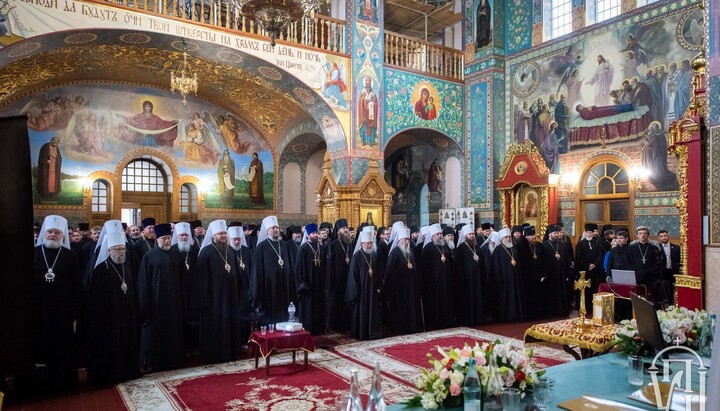
The Local Council of the UOC, May 27, 2022. Photo: UOC
Journalist Flavius Mihăies, during his investigation for The American Conservative into the religious situation in Ukraine, spoke with the head of the State Service of Ukraine for Ethnic Affairs and Freedom of Conscience (DESS), Viktor Yelensky, and representatives of the UOC clergy.
In a conversation with the journalist, Yelensky said that he had supposedly provided the UOC with the opportunity, in the form of a public letter, to voluntarily demonstrate the actions taken by the Church to break ties with the Russian Orthodox Church (ROC). "For reasons I cannot fully understand, they did not heed my suggestions," he stated.
"The UOC clergy I spoke to said that they did respond to Yelensky’s many such letters. They questioned what Yelensky meant by 'breaking all ties with the ROC'. If he was referring to being controlled by Moscow or supporting the aggressor, then the UOC had already ended any such ties. If he referred to being controlled by the ROC, Moscow, or 'supporting the aggressor', then the UOC does not have such ties. In fact, they said, the last remaining link to the ROC was mentioning ROC Patriarch Kirill in the liturgy, as is done with all other living Orthodox Patriarchs. On May 27, 2022, the Council of the Ukrainian Orthodox Church adopted a new statute, effectively making the UOC a self-governing church. The UOC appoints and is solely responsible for its bishops and priests," the article states.
According to Flavius Mihăies, the UOC clergy also described Yelensky's demands as cynical and unconstitutional.
"The clergy warned that, if the UOC were to make a public political statement declaring the UOC’s complete break from the ROC, the ROC would likely initiate a schism procedure, leading other national Orthodox churches to view the UOC differently and causing the UOC to lose its canonical dignity," he wrote.
The publication also notes that "the UOC clergy speculated that damaging the UOC’s canonical standing within the global Orthodox community might well be the Ukrainian government’s real intention."
As the Union of Orthodox Journalists reported, the head of DESS distanced himself from the situation with the forcible 'transfers' of UOC parishes to the Orthodox Church of Ukraine (OCU) during an interview with a journalist from an American publication.
Read also
DESS finds Balta Eparchy of UOC affiliated with ROC
Yelensky-headed state service said it found signs of affiliation of the Balta Eparchy Administration of the UOC with the ROC.
Upper Lavra court hearing postponed
The next court hearing in the Upper Lavra case has been scheduled for November 3.
UOC priest blesses ambulances at Kamianske medical center
A UOC priest in Kamianske blessed ambulances for a medical facility and wished its doctors God's help in their work.
Dumenko to German ambassador: Law targeting UOC also applies to other groups
Epifaniy Dumenko sought to defend Ukraine’s law restricting religious organizations during a meeting with the German ambassador.
Activists bused to court hearings in UOC cases, media say
A minibus has been spotted transporting protesters to and from courthouses where UOC cases are being heard.
Firefighters save historic UOC church from fire in Zakarpattia
A fire broke out at a UOC church in the Tiachiv district, damaging the altar and church furnishings.