Head of Lviv RMA threatens remaining UOC parishes with court action
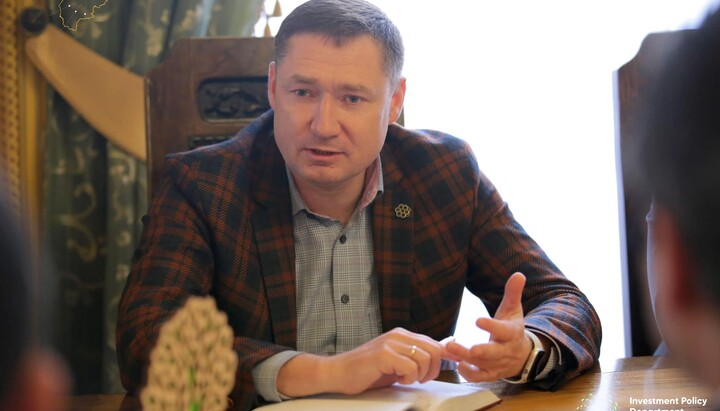
Maxym Kozytsky. Photo: arr.Lviv.UA facebook
Maxym Kozytsky, the head of the Lviv Regional Military Administration, stated that the 17 religious communities of the Ukrainian Orthodox Church (UOC) registered in the region have a "final chance to break away from the subordination to the Moscow Patriarch." Kozytsky made this statement on his Facebook page on August 20, the day the law banning the UOC was passed.
"I hope that the representatives of these communities will make the right choice within 9 months," the message reads.
He warned that "otherwise, their activities will be terminated through court proceedings."
"Let truth always prevail, because where there is truth, there is God," Kozytsky wrote.
As previously reported by the UOJ, residents of Lviv have been urged to report any UOC worship services held in private homes.
Read also
Khust Eparchy honors memory of St. Job of Uholka
A Liturgy is served in Mala Uholka, a birthplace of St. Job of Uholka, on the saint's feast day.
UOC parish in Cologne donates ultrasound machine to Kharkiv region hospital
In Cologne, UOC believers raised funds for an ultrasound machine for the Kehychivka district hospital in the Kharkiv region.
Shevchuk tells Pope Leo of Ukraine's preparations for "another harsh winter"
The head of the UGCC expressed "special gratitude" to the Pope for his phone calls with Putin and Zelensky.
Berlin hierarch comments on Phanar document published by UOJ-USA
Metropolitan Mark called the information about the 2018 "Unification Council" alarming if confirmed, and expressed hope that Patriarch Bartholomew will reconsider his position.
UOC marks Synaxis of All Saints of Volyn Land at Lutsk cathedral
Metropolitan Serhiy of Ternopil and Kremenets led the Liturgy on the feast day of the Lutsk cathedral of All Saints of the Volyn Land.
SBU detains OCU cleric who organized draft evader's escape for money
In Transcarpathia, law enforcement officers detained a clergyman of the OCU who arranged for a draft evader to be smuggled into Slovakia for $15,000.