DESS head explains why Law 3894 is beneficial
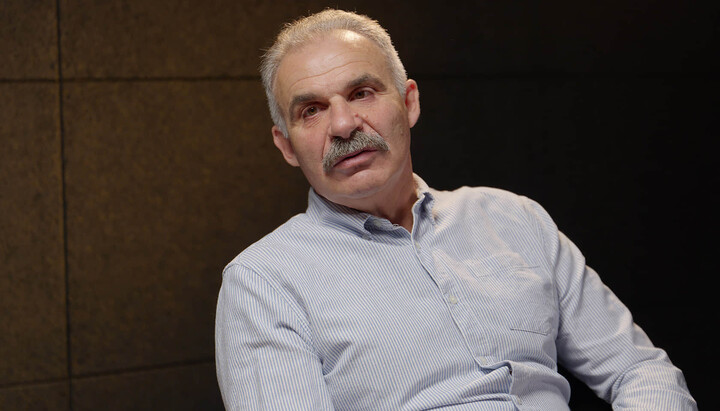
Viktor Yelensky. Photo: Ukrainska Pravda
In an interview with Ukrainska Pravda, Viktor Yelensky, head of the State Service of Ukraine for Ethnopolitics and Freedom of Conscience (DESS), discussed the significance of Law 3894 and its compliance with international norms.
He stated that Law 3894 allows Ukraine to restrict freedom of religion if it serves a legitimate purpose.
"The second basis is that the restrictions are implemented in a manner acceptable to a democratic society. This law provides for an entirely democratic procedure, including the fact that the final decision is made by the court. Therefore, the procedure is acceptable for a democratic society," Yelensky said.
Yelensky is convinced that the law, which effectively bans the UOC (Ukrainian Orthodox Church), is not discriminatory, as it does not set different rules for one Church compared to another, meaning it does not create one framework for one religious organization and another for a different one.
Another important condition for compliance with international law, according to Yelensky, is that the law should not impose a burden on an individual's conscience.
"Submitting to the Moscow Patriarchate is not a part of Orthodox doctrine. That is, if you do not submit to the Moscow Patriarchate, or to the Serbian, Antiochian, or any other Patriarchate, you do not cease to be Orthodox. Therefore, this does not burden your conscience... There is a very important clarification that if a church associated with the Russian Orthodox Church (ROC) breaks away from it, makes an appropriate declaration, and provides the necessary documents, this law does not apply to it," he said.
The official noted that he would rewrite some provisions of Law 3894, but overall he praised the good balance of the document.
"Some aspects could be enhanced, some things could be removed, but overall it is balanced and functional. We are not North Korea or Gaddafi's Libya – this is understood by both strong opponents and proponents of the law. But it allows us to halt the Russian Church here. Understanding its influence is actually quite difficult," he emphasized.
As the UOJ previously reported, the state can restrict religious freedom, according to Yelensky.
Read also
OCU activist admits breaking into UOC church in Sloviansk
Oleksandr Onyshchenko said that the OCU held its first "service" at the Seraphim Church, which had previously been broken into by forcing the locks and doors.
Archimandrite Ioustinos, longtime keeper of Jacob's Well, dies in Jordan
Archimandrite Ioustinos (Mamallos), the keeper of Jacob's Well in Nablus, has died after a prolonged illness.
Pilgrim group from Kyiv Theological Seminary visits Mount Athos
KTS students are making a pilgrimage to the holy sites of Romania, Greece, Mount Athos and Italy.
UOC cathedral celebrates its patronal feast in Ternopil
The service in the cathedral of the Holy Martyrs Faith, Hope, Love and their mother Sophia was led by Metropolitan Serhii of Ternopil, concelebrated by four hierarchs.
MinCulture marks centenary of Soviet-era reserve at Lavra's Refectory Church
Representatives of the Ministry of Culture presented awards to the Reserve's employees on the occasion of the anniversary at the Refectory Church of the Lavra.
Conference to mark 1700th anniversary of Christianity adoption held in Georgia
In Georgia, representatives of the Church and the state noted the defining role of Christianity in the country's cultural development.