Religious scholar: Law 3894 should not be directed only against one Church
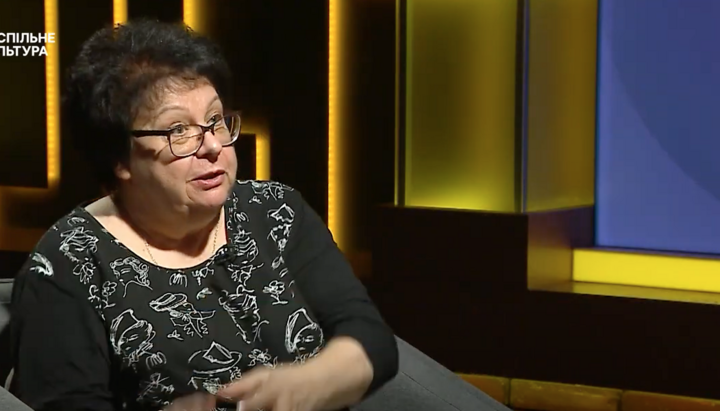
Liudmyla Fylypovych. Photo: a screenshot from Suspilne
Liudmyla Fylypovych, religious scholar, Doctor of Philosophy, and Professor at the Skovoroda Institute of Philosophy, NAS of Ukraine, appeared on the Suspilne channel program, where she discussed Law No. 3894, aimed at banning the Ukrainian Orthodox Church in Ukraine. She noted that the law was developed without the involvement of representatives of religious organizations or experts on religious studies.
Fylypovych emphasized that the expectations of religious scholars were not met: "We anticipated that it would not be directed against any specific Church." In her opinion, there are still religious organizations in Ukraine that maintain ties with Russia and continue to spread pro-Russian narratives, even if not obviously.
The expert pointed out that the draft law specifically mentions the prohibition of the "RF Orthodox Church" rather than the "Russian Orthodox Church", which is quite natural given the hostile stance of this organization towards Ukraine. However, she raised the question: "What Church is this? Who falls under this designation?" Fylypovych stressed that the UOC had abandoned the attachment "Moscow Patriarchate" and declared itself independent as early as May 2022.
"What shall we do now?" asked the religious scholar, suggesting a "targeted designation" for those who are genuinely connected with Russia. She emphasized that there are specific cases where hierarchs and clergy of the UOC have been accused of collaboration, which, according to her, confirms their connection to the RF Orthodox Church based on evidence found (literature, Russian church calendars with portraits of UOC hierarchs, images of Emperor Nicholas II). She concluded that as a religious scholar, such evidence of spiritual connection is sufficient for her, but it is inadequate from a theological perspective.
As reported by the UOJ, at the preparation stage of the anti-church law, Liudmyla Fylypovych stated that there are no clear mechanisms for implementing the ban on the UOC, and it would cause significant damage to Ukraine's image.
Read also
Pilgrim group from Kyiv Theological Seminary visits Mount Athos
KTS students are making a pilgrimage to the holy sites of Romania, Greece, Mount Athos and Italy.
UOC cathedral celebrates its patronal feast in Ternopil
The service in the cathedral of the Holy Martyrs Faith, Hope, Love and their mother Sophia was led by Metropolitan Serhii of Ternopil, concelebrated by four hierarchs.
MinCulture marks centenary of Soviet-era reserve at Lavra's Refectory Church
Representatives of the Ministry of Culture presented awards to the Reserve's employees on the occasion of the anniversary at the Refectory Church of the Lavra.
Conference to mark 1700th anniversary of Christianity adoption held in Georgia
In Georgia, representatives of the Church and the state noted the defining role of Christianity in the country's cultural development.
MP urges to ease pressure on UOC for sake of peace
Oleksii Honcharenko proposed compromises on language, historical memory, and Church issues as part of efforts to achieve peace, saying those who wish to attend the “Russian Church” should be allowed to do so.
Court takes 17th-century church in Staryi Pochaiv from UOC community
A commercial court overturned a 2018 registrar’s decision and stripped the UOC’s Ternopil Eparchy of ownership of the 17th-century church.