Church and state: Does Ukraine really differ from the USSR?
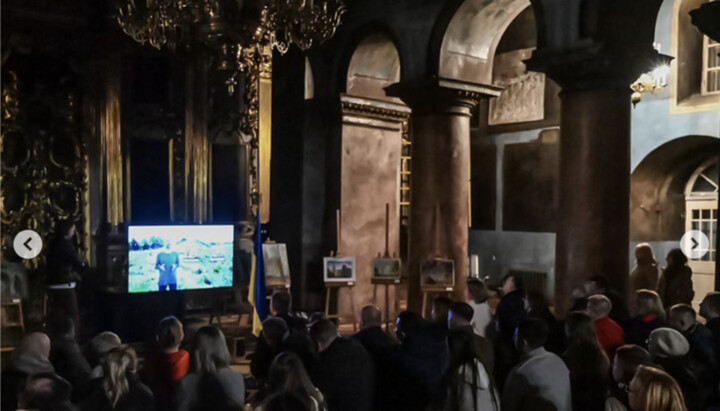
Film screening in Chernihiv Cathedral. Photo: Suspilne
A screen was set up by the Royal Doors, and chairs were brought in for the audience, creating a makeshift movie theater.
Documentary projects are valuable, of course, but it raises the question – are there not enough cinemas, theaters, assembly halls, and other venues in Chernihiv where this screening could have taken place? Undoubtedly, there are.
It seems the authorities felt compelled to hold some kind of event in the 11th-century cathedral to demonstrate that it wasn’t taken from the faithful in vain.
But if we look back to what happened to the church 100 years ago, we see a similar situation.
In 1926, Soviet authorities banned worship in the cathedral and handed it over to "Glavrosmaslozhirsbyt" (the name of the food base – Ed.) to be used as a warehouse. Later, it was turned into a museum.
Some might argue that a movie theater in a church is better than a warehouse. But the ancient architects built this sacred space for prayer, not for warehouses, museums, dance floors, lecture halls, and so on.
Ukraine strongly condemns the crimes of the totalitarian Soviet regime, including in the religious sphere.
But it would be worthwhile if some official could refer to the example of the Transfiguration Cathedral to explain – what exactly is the difference today?
Read also
Shoulder straps or a cassock: who writes the script for UOC "fighters"?
Everything indicates that both Veliar and Pshenychny are ordinary performers of someone else's script. There is only one question – does the scriptwriter wear shoulder straps or a cassock?
Why is it legal to kill a person before birth but not after?
Children are the most privileged members of society. Yet that same society officially permits children to be killed – and on a massive scale.
Honoring the Bolsheviks’ successors at Kyiv Lavra
It was under the Reserve that the relics of the saints were desecrated, Lavra churches were turned into an atheism museum, and toilets were installed in sanctuaries.
"Degenerates" and "stupid animals": anti-UOC activists turn on children
Future historians will wonder how a vast country’s information agenda could have been shaped for so long by people so petty, vicious, and utterly contemptible.
Zelensky sees murder of Polish priest but not of Sviatohirsk monk
Why does Zelensky react so emotionally and swiftly to the murder of a Catholic cleric while remaining completely silent about the murder of an Orthodox monk?
UOC vs. OCU numbers: pollsters count, social media recount
Official polling suggests Dumenko’s structure has an overwhelming lead in the number of parishioners, while social media polls paint a very different picture. Which should we believe?