DESS head explains why Law 3894 is democratic and legitimate
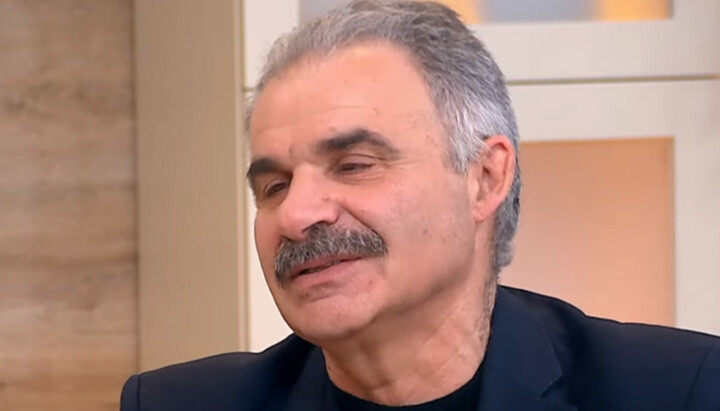
Viktor Yelensky. Photo: TSN
Viktor Yelensky, head of the State Service of Ukraine for Ethnopolitics and Freedom of Conscience (DESS), spoke at a seminar on the topic "Protecting Freedom of Conscience and the Rights of National Minorities (Communities) in the Context of the Start of EU Accession Negotiations for Ukraine," as reported by DESS.
During the seminar, issues of state-church relations were discussed, including the recently adopted Law 3894, which is sometimes referred to as the "Law on the Ban of the UOC." The head of the agency commented on the law, noting that it is not intended to ban the Ukrainian Orthodox Church but aims to facilitate its separation from the Moscow Patriarchate. Yelensky emphasized that the "Law on the Protection of the Constitutional Order in the Activities of Religious Organizations" is legitimate because its purpose aligns with democratic norms and provides for a final court decision.
“This law does not restrict freedom of religion, as submission to the Moscow Patriarchate is not obligatory for Orthodox doctrine. The Ukrainian state does not require the UOC to switch to another calendar, change the language of worship, or proclaim autocephaly, but it does expect them to separate from the control of the Moscow Patriarchate and provide evidence of this,” stated Viktor Yelensky.
He also noted that the ROC, as an "ideological continuation of Putin's regime," should be separated from Ukraine's religious life for the sake of protecting national interests.
As reported by the UOJ, the DESS head previously stated that Ukraine surpasses Europe in the level of governmental non-interference in the affairs of religious organizations.
Read also
UOC priest’s father killed in AFU military service laid to rest in Sumy
UOC clergy held a funeral service for Ukrainian serviceman Serhii Taptunov at Holy Trinity Cathedral in Sumy. He was buried at a city cemetery with military honors.
Patriarch Bartholomew says his see ensures unity in Christ’s Body
Speaking at the Bulgarian Church's Holy Synod, Patriarch Bartholomew declared that the Archbishop of Constantinople serves as the unifying link and guarantor of Orthodox unity.
Patriarch Daniel calls for preserving Church unity
In a sermon at St. Alexander Nevsky Cathedral in Sofia, the Bulgarian Primate emphasized humility, repentance, and fidelity to the Orthodox faith as the path to overcoming divisions.
Bulgarian and Constantinople Patriarchs attend Liturgy at Sofia Cathedral
Metropolitan Barnabas presided over the Liturgy at St. Alexander Nevsky Cathedral in Sofia as part of celebrations marking two anniversaries of St. John of Rila.
Prosecutors seek to seize Dormition Church from UOC community in Pisky
Prosecutors are seeking to transfer a wooden church in Poltava Region, handed over to believers in 1992, to state ownership under the regional administration.
Metropolitan Onuphry: Love for enemies destroys evil, revenge multiplies it
The UOC Primate urged believers to forgive those who wrong them and do good without expecting gratitude or reward.