Against whom are Russia’s “warriors of the Lord” fighting?
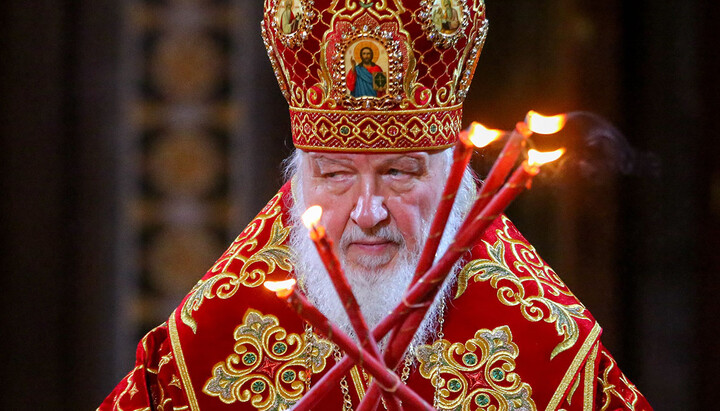
Patriarch Kirill. Photo: RBC
During the plenary session of the 26th Russian Assembly, Patriarch Kirill declared that the calling of Russians is to be “warriors of the Lord.”
The head of the Russian Orthodox Church seems to frame this “warriorhood” in a spiritual sense, citing the words of the Apostle Paul, suggesting that Russian Christians are waging a “battle against the spiritual forces of evil in the heavenly realms” (Ephesians 6:12).
However, the rest of the Patriarch’s “military” rhetoric raises doubts about this interpretation. In his speech at the October 2024 meeting of the Russian Assembly’s presidium, he cited the same passage but added that if “forces of evil” begin to control global politics and economics through people, Russia must “offer decisive resistance.” Here, it becomes clear that the Patriarch is not speaking of spiritual resistance but of a battle against flesh and blood – a battle in which it is not the so-called “rulers of the world” who suffer and die, but ordinary, “small” Ukrainians, whom the Patriarch, incidentally, refers to as part of the same people as Russians.
“Among the external challenges to the Russian world, the most pressing threat today is the military actions, which claim the lives of our brothers and sisters every day. I am speaking not only about the citizens of Russia but also about the citizens of Ukraine,” said the head of the Russian Orthodox Church at the time.
Furthermore, he lamented that people in Russia have grown weary of the war and criticized this weariness: “Some prefer not to notice everything that is happening – the pain, the suffering of their brothers. Such thoughtless carelessness starkly contrasts with what is now happening in the special military operation zone, where our people are dying.”
When summing up all these statements, it is hard to conclude that the Patriarch’s call for Russians to be “warriors of Christ” is an encouragement to intensify prayer. It appears to be yet another attempt to sacralize war.
Read also
Who destroyed and restored Kyiv Lavra? MinCulture's video reveals the truth
The Culture Ministry’s propaganda about the Kyiv-Pechersk Lavra has inadvertently revealed the truth.
Ternopil post on Feast of Intercession: Has calendar reformn failed?
A significant number of believers have rejected the new church calendar introduced by the OCU and UGCC with government support.
Shoulder straps or a cassock: who writes the script for UOC "fighters"?
Everything indicates that both Veliar and Pshenychny are ordinary performers of someone else's script. There is only one question – does the scriptwriter wear shoulder straps or a cassock?
Why is it legal to kill a person before birth but not after?
Children are the most privileged members of society. Yet that same society officially permits children to be killed – and on a massive scale.
Honoring the Bolsheviks’ successors at Kyiv Lavra
It was under the Reserve that the relics of the saints were desecrated, Lavra churches were turned into an atheism museum, and toilets were installed in sanctuaries.
"Degenerates" and "stupid animals": anti-UOC activists turn on children
Future historians will wonder how a vast country’s information agenda could have been shaped for so long by people so petty, vicious, and utterly contemptible.