Expert: Unity of Ukrainian Orthodoxy within the OCU does not seem realistic
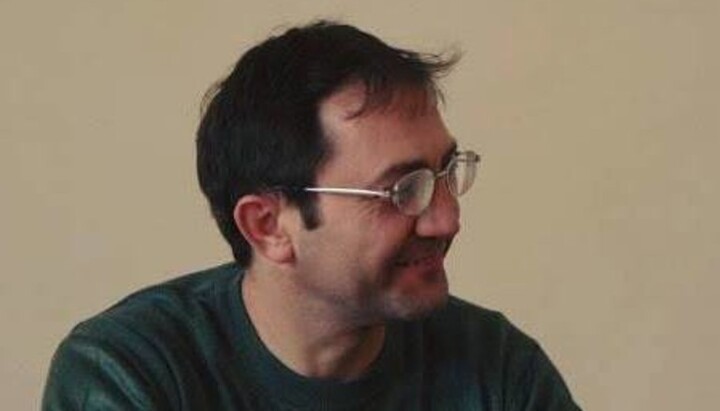
Oleksandr Sarapin. Photo: Facebook
Oleksandr Sarapin, an associate professor at the Department of Religious Studies at Taras Shevchenko National University of Kyiv, presented a report on the state of Orthodoxy in Ukraine, in which he criticized the policies of the OCU.
According to Sarapin, the OCU has "grown accustomed to positive support and approval from the authorities, media, and social networks," which has helped establish its image as a "state church." He also noted that the OCU leveraged the patriotic sentiments of Ukrainians during the war. The religious scholar believes that public opinion supports the OCU's efforts to create a unified Ukrainian Orthodox Church.
Sarapin highlighted that the OCU's aspiration to exclusivity within Ukraine’s canonical domain could hinder dialogue with other Orthodox jurisdictions. "Metropolitan Epifaniy has repeatedly emphasized that the OCU is the only canonical Orthodox jurisdiction in Ukraine. However, similar claims to canonical territory are also made by the UOC and the UOC-KP," Sarapin stated, pointing out the tensions between Orthodox denominations.
The religious scholar also questioned Epifaniy's declarations about the OCU being Ukraine's largest confessional organization in terms of the number of communities. Sarapin cited the OCU leader’s claim that his structure is the largest religious organization in the country: "However, according to DESS data as of January 1, 2024, there were 8,295 OCU religious organizations and 10,919 UOC religious organizations. Such claims implicitly highlight the OCU's exclusivity as the sole canonical jurisdiction in Ukraine. Naturally, this stance makes constructive dialogue on the unity of Ukrainian Orthodoxy unlikely. Furthermore, negotiations from a position of superiority over UOC competitors are unlikely to be productive," Sarapin remarked.
The expert also warned that the OCU's unitary approach could lead to increased ecclesiastical authoritarianism: "The danger of implementing a course toward canonical unitarism lies in the potential shift toward church authoritarianism, which contradicts the idea of pluralism."
In conclusion, Sarapin emphasized that the future of Orthodoxy in Ukraine depends on the ability of different denominations to find common ground for cooperation, a challenging task given the current disagreements.
As previously reported by the UOJ, the "synod" of the OCU expressed disappointment over the UOC's unwillingness to engage in dialogue.
Read also
UOC hierarch celebrates Liturgy at relics of St. Nicholas in Bari
Archbishop Ambrose of Zghurivka, UOC clergy serving in Italy, and KDAiS students prayed at the myrrh-streaming relics of St. Nicholas the Wonderworker in Bari.
Police pledge increased security at UOC Kyiv Metropolia court hearing
UOC lawyers secured additional police presence following repeated provocations and direct pressure on the legal team outside the courthouse.
“Imperialist”: OCU cleric explains why Hieromartyr Vladimir is not venerated
An OCU representative claimed that Hieromartyr Vladimir supported “imperial policies” and was killed over money rather than for his faith in Christ.
Metropolitan Nektarios: Global system seeks to create “universal religion”
The Greek hierarch warned of the dangers posed by the global system.
OCU supporters stage provocation at soldier’s funeral in Polytsi
Relatives of the fallen soldier demanded that an OCU cleric conduct the funeral service inside a UOC church.
UOC Chancellor on OCU formation report: pressure, fear and suspicion
Metropolitan Anthony says the atmosphere of December 2018 described in the Phanar cleric’s report was the complete opposite of the love and freedom in which the Holy Spirit works.