Parable: The cobbler’s son
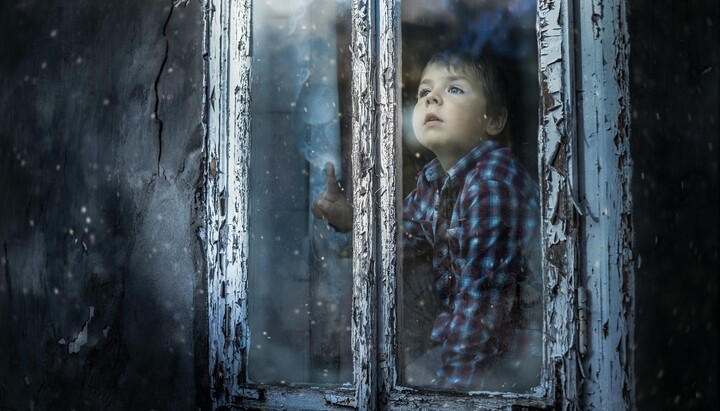
Photo: myslo
Once there lived a cobbler who had lost his wife and was left with his young son. On the eve of Christmas, the boy said to his father:
“Today, the Savior will visit us.”
“Nonsense,” the cobbler replied, not believing him.
“You’ll see, He will come. He told me so in my dream.”
The boy eagerly awaited the special guest, peering out the window, but no one appeared. Suddenly, he saw two boys in the yard beating another boy, who didn’t even fight back. The cobbler’s son rushed outside, chased away the bullies, and brought the beaten boy home. Together with his father, they fed him, washed him, and combed his hair. Then the cobbler’s son said:
“Papa, I have two pairs of boots, but my new friend’s toes are sticking out of his shoes. Let me give him my warm boots – it’s freezing outside, and it’s Christmas, after all!”
“Let it be as you wish,” the father agreed.
They gave the boy the boots, and he left joyful and grateful.
Time passed, but the cobbler’s son remained by the window, still waiting for the Savior.
A beggar passed by the house, calling out:
“Kind people! Tomorrow is Christmas, and I haven’t had a crumb to eat in three days. Please, feed me for Christ’s sake!”
“Come in, Grandpa!” the boy called through the window.
“God bless you!”
He and his father fed and warmed the old man, who left them with joy in his heart.
Yet the boy kept waiting for Christ and began to worry. Night fell, the streetlights flickered, and the snowstorm howled outside. Suddenly, the boy exclaimed:
“Oh, Papa! There’s a woman standing by the lamppost with a little baby. Look how cold they must be!”
The cobbler’s son ran outside and brought the woman and her baby into the house. They gave them food and drink, and the boy said:
“Where will they go in this frost? The blizzard is raging outside. Let them stay with us overnight, Papa.”
“But where will they sleep?” asked the cobbler.
“Well, you can sleep on the sofa, I’ll sleep on the chest, and they can have our bed.”
“So be it,” said the father.
Finally, everyone went to bed. That night, the boy dreamt that the Savior came to him and said gently:
“My dear child! May you be happy all your life.”
“Lord, I waited for You all day,” the boy replied in surprise.
The Lord said:
“But I came to you three times today, dear one. And three times you welcomed Me, in a way no one could have done better.”
“Lord, I didn’t know. When was that?”
“You didn’t know, yet you still received Me. The first time, you saved not just a boy from the bullies, but Me. Just as I once endured insults and wounds from wicked people, so did that boy… Thank you, my dear child.”
“Lord, when was the second time You came? I kept watching through the window,” asked the cobbler’s son.
“The second time, I came not as a beggar, but as Myself to dine with you. You and your father ate crusts, but gave Me the festive pie.”
“And the third time, Lord? Maybe I would have recognized You then?”
“The third time, I even stayed overnight with My Mother.”
“How could that be?”
“Once, we had to flee to Egypt from Herod. And you found My Mother by the lamppost, like in the Egyptian desert, and sheltered us under your roof. Be happy, my dear child, forever!”
The boy woke up the next morning and immediately asked:
“Where is the woman with the baby?”
He looked around – no one was there. The boots he had given to the poor boy were back in the corner, untouched. The festive pie was still on the table. But in his heart, there was an indescribable joy like never before…
Read also
Why holy monasteries turned into state prisons
The history of Christian Europe has preserved the memory of times when monasteries became places of state exile. The fates of monarchs and righteous men were decided there.
A shepherd boy with a letter from Christ to French king
In the summer of 1212, thousands of pilgrims carrying staffs waited for the sea to part before them. Later chroniclers added ships, slave traders, and a pope's lament to their story.
Facade of bones and facade of light
Antoni Gaudí spent forty-three years building a church in Barcelona, knowing that this construction was for the ages.
Trial of a dead pope
Once in Rome, the body of a deceased pope was seated on the throne and put on trial. The accusation relied on a church canon that had once saved his see.
Monastery built in defiance of king
When Orthodox believers in Minsk were left with just one church, townspeople decided to build another – and even a royal decree did not stop them.
Young Mother and Sleeping Christ
Michelangelo carved a Virgin Mary who looks younger than her Son – and signed his name in marble for the only time in his life. Neither of these peculiarities was accidental.