Two presidents
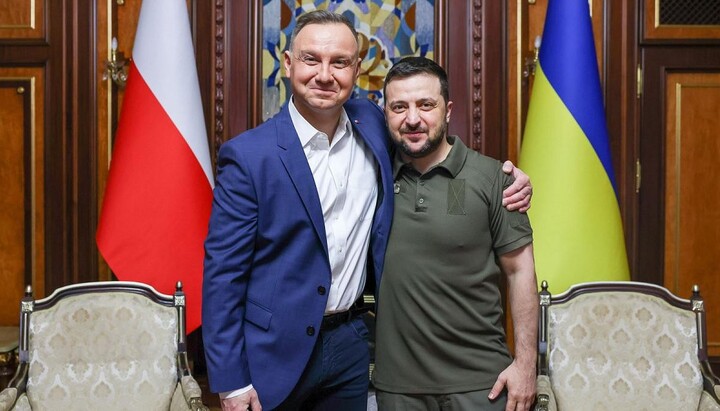
Andrzej Duda and Volodymyr Zelensky. Photo: Open sources
In Poland, there are 230 Orthodox parishes; in Ukraine, there are about 12,000 (UOC). In Poland, approximately 420,000 people identify with the Orthodox Church, while in Ukraine, around 6 million belong to the UOC.
But Duda congratulated his Orthodox citizens on Christmas while Zelensky did not. And not only did he not congratulate them, he took away their day off.
Duda wished that " throughout our Homeland, Christians of various denominations treat each other with respect and cordial openness, supporting one another in service and work for the common good". Zelensky remained silent. He said everything with his signature on the law banning the UOC.
Zelensky, be like Duda.
Read also
Why is Jerusalem “wrong” about OCU, but Constantinople isn’t?
In the eight years since the OCU was established, we have never once heard its leader suggest that the Patriarch of Constantinople is capable of error.
Who destroyed and restored Kyiv Lavra? MinCulture's video reveals the truth
The Culture Ministry’s propaganda about the Kyiv-Pechersk Lavra has inadvertently revealed the truth.
Ternopil post on Feast of Intercession: Has calendar reformn failed?
A significant number of believers have rejected the new church calendar introduced by the OCU and UGCC with government support.
Shoulder straps or a cassock: who writes the script for UOC "fighters"?
Everything indicates that both Veliar and Pshenychny are ordinary performers of someone else's script. There is only one question – does the scriptwriter wear shoulder straps or a cassock?
Why is it legal to kill a person before birth but not after?
Children are the most privileged members of society. Yet that same society officially permits children to be killed – and on a massive scale.
Honoring the Bolsheviks’ successors at Kyiv Lavra
It was under the Reserve that the relics of the saints were desecrated, Lavra churches were turned into an atheism museum, and toilets were installed in sanctuaries.