Four criminal cases opened against UOC believers over Cherkasy clashes
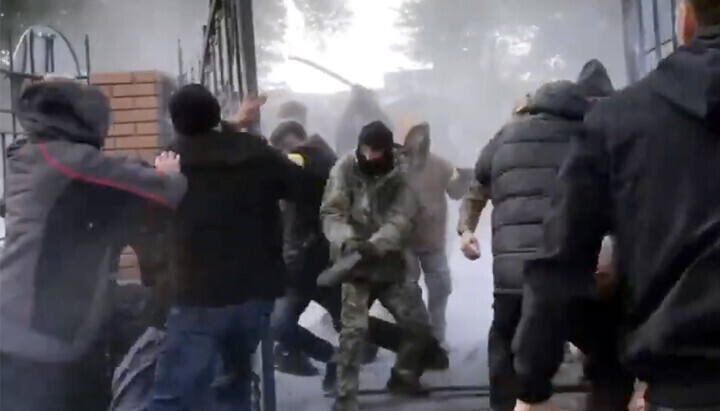
Seizure of the UOC Cathedral in Cherkasy, October 17, 2024. Photo: religionnews
In Cherkasy, police have issued formal suspicions against four defenders of the Archangel Michael Cathedral of the Ukrainian Orthodox Church (UOC). Among them are two laypeople and two clergymen. They are accused under Article 296 of the Criminal Code of Ukraine – hooliganism, according to the kozakTv1 Telegram channel.
Authorities have also opened a criminal case against Father Oleksandr Smyk, the trustee of the Marfo-Mariinsky Sisterhood. Meanwhile, the case against Father Roman Horkavenko has already been sent to court. "He is apparently accused of using a pepper spray canister against hired OCU militants who stormed the Archangel Michael Cathedral of the UOC," journalists report.
According to available information, the investigation is proceeding at an accelerated pace.
As previously reported by the UOJ, Metropolitan Theodosiy has urged law enforcement not to participate in persecution against the Church.
Read also
Reports to SBU of weapons in UOC churches were always false, Novynskyi says
The protodeacon said that under Maliuk, inspections began to be accompanied by public accusations against the Church without evidence.
Culture Ministry pledges to speed up seizure of Kyiv-Pechersk Lavra from UOC
Culture Minister Tetiana Berezhna has pledged to personally attend a court hearing in the Kyiv-Pechersk Lavra case.
Kamianske Eparchy honors Dnipro Icon of the Mother of God for first time
A festive service was held at a cathedral in Kamianske, where the Dnipro Icon of the Mother of God was brought out for veneration by the faithful for the first time.
Kyiv conscription officers abduct UOC priest
TRC officers reportedly abducted Maksym Kostiuchenko, a cleric of a UOC church in the Ukrainian capital.
Court grants DESS lawsuit to dissolve UOC’s Rovenky Eparchy
The appeals court partially granted the DESS lawsuit seeking to dissolve the Rovenky Eparchy but rejected the request to seize its property, citing a gap in Ukrainian legislation.
Met. Meletiy consecrates house of worship for UOC community in Dankivtsi
Members of the persecuted UOC Intercession parish in Dankivtsi have converted a house into a place for communal prayer and worship services.