Greek theologian: Only 12% of UOC parishes have left even by official figures
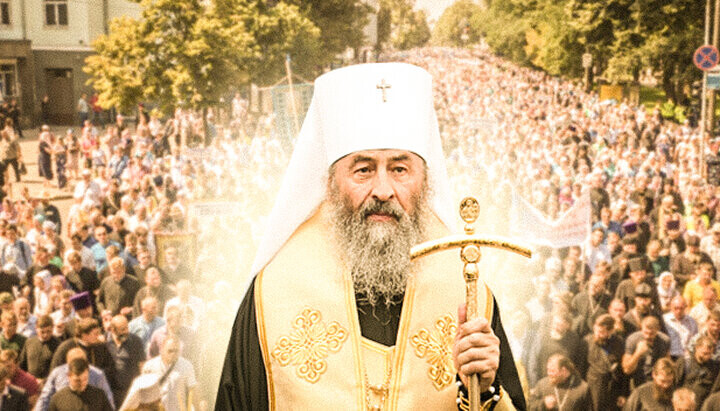
Despite all government efforts, believers are not leaving the UOC. Photo: UOJ
Greek theologian and church writer Anastasios Gotsopoulos analyzed Ukrainian government statistics on transitions from the UOC to the OCU in his article "Ukrainian Autocephaly Has Failed", published on the Greek section of the UOJ.
He recalled that in response to two official requests, the State Service for Ethnopolitics (DESS) reported that by the end of 2024, 1,575 parishes had transitioned from the UOC to the OCU.
A detailed breakdown of transitions from the canonical Church of Metropolitan Onuphry to the new structure of Epifaniy Dumenko, according to official data from Ukraine’s DESS:
2018– 2 parishes
2019 – 319 parishes
2020 – 30 parishes
2021 – 25 parishes
2022 – 496 parishes (start of the war)
2023 – 471 parishes
2024 – 232 parishes
The theologian stressed that Ukrainian authorities tend to downplay the number of UOC parishes while inflating the number of OCU parishes. He also pointed out that "the number of truly voluntary parish transitions was significantly lower, as there is ample undeniable evidence, even confirmed in reports by international organizations and the UN Human Rights Committee, of violent seizures of churches and monasteries against the will of their members."
But even if one accepts the government's claim that all these transitions were voluntary, Gotsopoulos argues that the figure of 1,575 parishes demonstrates that "the Zelensky government, through DESS, acknowledges that the granting of autocephaly, as carried out in 2018–2019, has completely failed."
"The figure of 1,575 'transitions' out of a total of 12,262 parishes that were under the canonical Church in 2018 accounts for only 12.8% of all church legal entities (metropolitanates, parishes, monasteries, institutions, etc.)," writes the Greek theologian.
He emphasizes that "the pressure from Ukrainian state and semi-state bodies, as well as various groups, on parishes under the canonical autonomous Church to transition into Epifaniy’ structure is enormous."
"As the canonical Church has stated, and as even international organizations (such as the UN Human Rights Committee) have confirmed, not only psychological pressure is being exerted, but also physical violence and threats of persecution and imprisonment against bishops, priests, journalists, and believers," the priest writes. He also reminds that Ukraine has been at war with Russia since February 2022.
"The propaganda of the Zelensky government, Epifaniy’s church structure, and their supporters systematically slander the canonical Church and its leadership as Russian agents and traitors to Ukraine. This is despite the fact that the Metropolitan of Kyiv and the canonical Church under his leadership have repeatedly and unequivocally condemned the Russian invasion and actively support the Ukrainian army. Despite all this pressure, slander, violence, and persecution, the overwhelming majority of the canonical Orthodox Church’s members (87%) remain loyal to their traditional Church," Protopresbyter Anastasios emphasized.
Earlier, the UOJ reported that, according to the Greek theologian, the war has proven that it is not Moscow preventing parishes from joining the OCU.
Read also
Upper Lavra court hearing postponed
The next court hearing in the Upper Lavra case has been scheduled for November 3.
UOC priest blesses ambulances at Kamianske medical center
A UOC priest in Kamianske blessed ambulances for a medical facility and wished its doctors God's help in their work.
Dumenko to German ambassador: Law targeting UOC also applies to other groups
Epifaniy Dumenko sought to defend Ukraine’s law restricting religious organizations during a meeting with the German ambassador.
Activists bused to court hearings in UOC cases, media say
A minibus has been spotted transporting protesters to and from courthouses where UOC cases are being heard.
Firefighters save historic UOC church from fire in Zakarpattia
A fire broke out at a UOC church in the Tiachiv district, damaging the altar and church furnishings.
Volyn Eparchy faithful collect six tons of aid for Sviatohirsk Lavra
Believers in Volyn collected food and warm clothing for people displaced by the war who have found shelter at Sviatohirsk Lavra.