German theologian: Ukrainian authorities are fighting the UOC even abroad
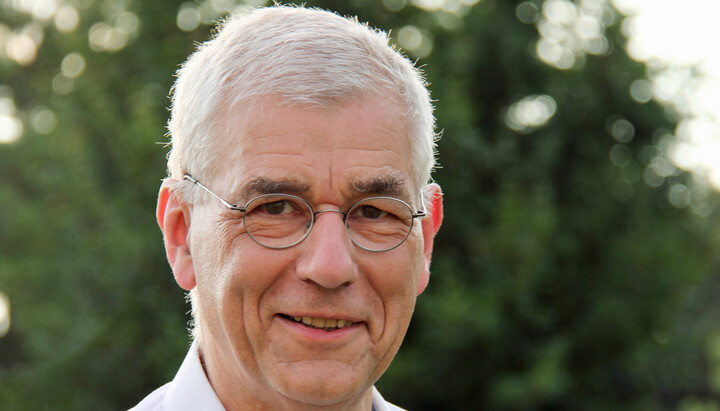
Thomas Bremer. Photo: katholisch.de
Professor Thomas Bremer of the University of Münster criticized the actions of the Ukrainian authorities, as well as representatives of the UGCC and the OCU, against UOC communities abroad in his article "Ukraine Takes Measures Against Its Largest Church – Now Even Abroad."
Bremer pointed to statements made by the head of the Ukrainian Greek Catholic Church (UGCC), Sviatoslav Shevchuk, alleging that UOC parishes abroad are "preparing a protest potential," as well as a call to the Security Service of Ukraine (SBU) from a cleric of the OCU (apparently referring to Heorhii Kovalenko). Additionally, he noted comments by Ukraine’s Minister of National Unity, Oleksandr Chernyshov, who referred to UOC communities in Germany as "Russian" in an interview with the German press.
The theologian emphasized that these claims are untrue.
"Parishes collect funds for the Ukrainian Armed Forces, and during services, a special prayer for Ukraine is read, which is mandatory in all UOC parishes. Services are conducted, as is customary in the UOC, in Church Slavonic, while sermons are delivered in Ukrainian… The accusations that prayers are offered for Russia, for Patriarch Kirill, or even for the Russian president are false and mostly come from people who have never attended UOC services," Bremer wrote.
Nevertheless, he pointed out that "the Ukrainian state has now targeted UOC communities abroad in its fight against the Ukrainian Orthodox Church."
"UOC priests working abroad complain that their offers of cooperation with Ukrainian diplomatic missions go unanswered. The websites of Ukrainian consulates create the impression that the UOC does not exist in Germany – only Greek Catholic communities and parishes under Constantinople (of which there are only a few) are mentioned. The activities of UOC communities, such as concerts, events, summer camps for children, visits from bishops, etc., are ignored by Ukrainian state representatives in Germany, despite the fact that the UOC is a legally recognized religious community both in Ukraine and officially abroad," the professor wrote.
According to Bremer, "all of this indicates that the measures against the UOC, as well as public statements by representatives of other Ukrainian churches, are aimed not only at banning the Church in Ukraine but also at weakening it abroad and discrediting it in the ecumenical sphere."
He stressed that because of the war, Ukraine needs unity now more than ever, not further division.
"The current government measures against the UOC are unlikely to heal this division. Not only should they be rejected on the grounds of religious freedom, but they also cause significant harm to Ukraine itself," the theologian concluded.
Earlier, the UOJ reported that, according to Bremer, most Ukrainian refugees abroad belong to the UOC.
Read also
Khust Eparchy honors memory of St. Job of Uholka
A Liturgy is served in Mala Uholka, a birthplace of St. Job of Uholka, on the saint's feast day.
UOC parish in Cologne donates ultrasound machine to Kharkiv region hospital
In Cologne, UOC believers raised funds for an ultrasound machine for the Kehychivka district hospital in the Kharkiv region.
Shevchuk tells Pope Leo of Ukraine's preparations for "another harsh winter"
The head of the UGCC expressed "special gratitude" to the Pope for his phone calls with Putin and Zelensky.
Berlin hierarch comments on Phanar document published by UOJ-USA
Metropolitan Mark called the information about the 2018 "Unification Council" alarming if confirmed, and expressed hope that Patriarch Bartholomew will reconsider his position.
UOC marks Synaxis of All Saints of Volyn Land at Lutsk cathedral
Metropolitan Serhiy of Ternopil and Kremenets led the Liturgy on the feast day of the Lutsk cathedral of All Saints of the Volyn Land.
SBU detains OCU cleric who organized draft evader's escape for money
In Transcarpathia, law enforcement officers detained a clergyman of the OCU who arranged for a draft evader to be smuggled into Slovakia for $15,000.