Will SBU continue to hunt for FSB agents within itself?
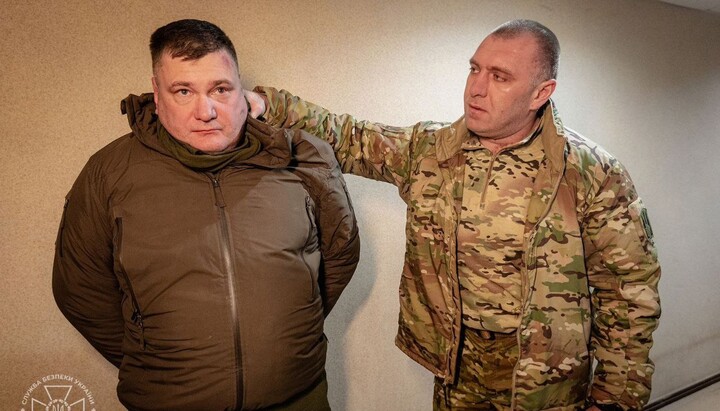
The SBU arrested the head of "T" Department, which was "responsible" for the UOC. Photo: SBU
We all remember the mass searches of monasteries and dioceses, where nothing was found, yet the operation successfully shaped public opinion, portraying the UOC as an "enemy of the people." And yet, according to government estimates, millions of Ukrainians identify with the UOC.
Now, let’s ask a simple question: Did this contribute to the unity of Ukrainians, or did it deepen divisions? The answer seems obvious.
Another simple question: In a time of war, does this benefit Ukraine – or its enemy? Again, the answer is clear.
Logically, with the arrest of the head of "Department T", the SBU’s campaign against the UOC should come to an end.
If it does not, then SBU Chief Vasyl Maliuk should keep looking for more FSB agents – within his own ranks.
Logical? Absolutely!
Read also
Who destroyed and restored Kyiv Lavra? MinCulture's video reveals the truth
The Culture Ministry’s propaganda about the Kyiv-Pechersk Lavra has inadvertently revealed the truth.
Ternopil post on Feast of Intercession: Has calendar reformn failed?
A significant number of believers have rejected the new church calendar introduced by the OCU and UGCC with government support.
Shoulder straps or a cassock: who writes the script for UOC "fighters"?
Everything indicates that both Veliar and Pshenychny are ordinary performers of someone else's script. There is only one question – does the scriptwriter wear shoulder straps or a cassock?
Why is it legal to kill a person before birth but not after?
Children are the most privileged members of society. Yet that same society officially permits children to be killed – and on a massive scale.
Honoring the Bolsheviks’ successors at Kyiv Lavra
It was under the Reserve that the relics of the saints were desecrated, Lavra churches were turned into an atheism museum, and toilets were installed in sanctuaries.
"Degenerates" and "stupid animals": anti-UOC activists turn on children
Future historians will wonder how a vast country’s information agenda could have been shaped for so long by people so petty, vicious, and utterly contemptible.