Criminal сases over "conscientious objectors" rise dramatically in Ukraine
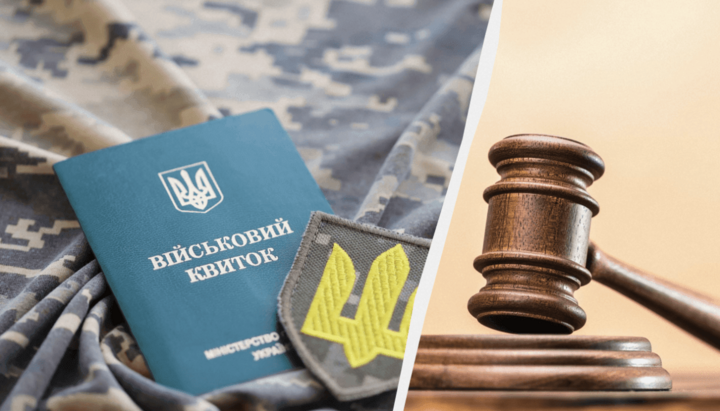
Illustrative photo. Source: UNIAN
Ukraine is witnessing a surge in criminal cases against men who refuse military service on religious grounds, according to the Norwegian human rights organization Forum 18, reported on March 10, 2025.
Human rights advocates particularly highlight the application of Article 402 of the Criminal Code ("Disobedience in a State of War or Combat Conditions"), which is originally intended for military personnel but is increasingly being used against civilians who have never taken the military oath.
One of the most high-profile cases is that of Serhii Semchuk, a Baptist who was sentenced to five years in prison for refusing to take up arms. According to the military enlistment office, he was supposed to serve without weapons, but he was later charged under Article 402 for alleged "disobedience".
According to Forum 18, the number of cases under Article 402 is increasing, especially among Jehovah's Witnesses and other religious groups. For example, among Jehovah's Witnesses alone, seven cases are already being prepared under this article, which researchers believe represents a new tactic of pressure to force them to renounce their beliefs.
At the same time, Article 336 of the Criminal Code ("Refusal to Be Drafted for Military Service During Mobilization or a Special Period") is also being widely used to prosecute conscientious objectors. Forum 18 reports that approximately 200 cases are already in court, with around 600 more being prepared, most of them targeting Jehovah's Witnesses.
Human rights activists point to the lack of an alternative civilian service for religious objectors in Ukraine, despite this contradicting international norms and the country’s Constitution.
"The UN Office of the High Commissioner for Human Rights (OHCHR) has stated that refusal of military service based on belief falls under Article 18 of the International Covenant on Civil and Political Rights ('Freedom of Thought, Conscience, and Religion') and has recognized 'the right of every individual to conscientious objection to military service as a legitimate exercise of the right to freedom of thought, conscience, and religion.' OHCHR also noted in its guidelines on conscientious objection that Article 18 is 'a non-derogable right... even during a public emergency threatening the life of the nation,’" the publication states.
Despite this, Ukraine’s Ministry of Defense insists that the limited alternative service permitted in peacetime does not apply during wartime.
"Article 35 of the Constitution of Ukraine guarantees the right to refuse military service based on beliefs. Officials refuse to provide alternative service to mobilized men who demand their constitutional right," human rights defenders emphasize.
As previously reported, another Jehovah's Witness was sentenced to three years in prison for refusing mobilization.
Read also
UOC's Sign Church damaged in Kherson air strike
In Kherson, Russian airstrikes shatter windows and damage the façade of the UOC’s Church of the Sign.
Yelensky: Not recognizing OCU means indirectly denying Ukrainian statehood
Viktor Yelensky believes that Local Churches that do not recognize the OCU thereby indirectly fail to recognize Ukrainian statehood as well.
UOC Lavra priest urges believers to accept hardships with gratitude
Archpriest Heorhiy Boyko at the prayer vigil near the Kyiv-Pechersk Lavra recalled the sufferings of Great Martyr George the Victorious.
UOC honors patron saint of Kherson land
A Divine service was held at the Holy Spirit Cathedral of Kherson on feast day of St. Barsanuphius of Kherson.
Nativity of John the Baptist Church of UOC damaged by shelling in Kharkiv
A church of the Kharkiv Eparchy (UOC) was damaged during another shelling.
Patriarch Bartholomew not to concelebrate with Bulgarian Church Primate
The Ecumenical Patriarch will attend the service at St. Alexander Nevsky Cathedral in Sofia as a guest.