The Church honors the memory of the 40 Martyrs of Sebaste
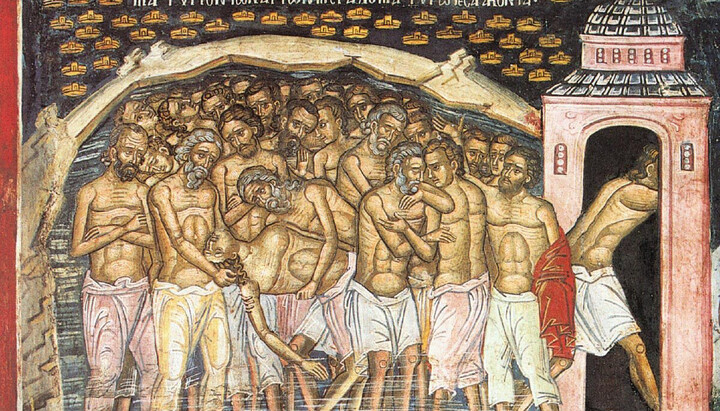
Only one of the martyrs gave in and ran to the bathhouse. Photo: Fresco from Dionysiou Monastery, Mount Athos, 1547
On March 22, the Orthodox Church commemorates the 40 Martyrs of Sebaste – saints from the early centuries of Christianity.
In 313 AD, Roman Emperor Saint Constantine the Great granted freedom to Christians. However, his co-ruler, the pagan Licinius, was preparing to become the sole emperor of Rome and decided to renew persecutions against the followers of Christ. He began the mass executions with soldiers, among whom were many devoted Christians.
These included the famed warriors of Sebaste. On Licinius’ orders, the local governor Agricolaus tried to compel his troops to offer sacrifices to the pagan gods. When they refused, they were thrown into prison. There, the Sebastean soldiers prayed to Christ and received a divine revelation: "He who endures to the end will be saved." The trial soon followed.
A week later, they were brought to court. The soldiers firmly responded to the pagan judge: "Take not only our military rank but also our lives – nothing is dearer to us than Christ our God."
On a bitterly cold winter day, the martyrs were led to a local lake and left there under guard – naked, on the ice. A heated bathhouse stood nearby, intended to tempt the soldiers into renouncing Christ in their agony. But only one of the sufferers could not endure – he ran to the bathhouse and immediately fell dead at the threshold.
In the early morning, one of the guards awoke and saw radiant halos above the heads of the thirty-nine remaining Christians. Realizing why there were only thirty-nine crowns, he exclaimed: "I, too, am a Christian," and stepped onto the ice to join them. At dawn, they were all taken from the lake, their legs were broken, and they were thrown into the fire.
Saint Ephraim the Syrian, whose Lenten prayer accompanies the faithful throughout Great Lent, composed five hymns in their honor.
Three days after the execution, the Bishop of Sebaste, Peter, saw the martyrs in a dream. With his assistants, he gathered their holy relics, piece by piece, and gave them a proper burial.
As previously reported by the UOJ, the Church recently celebrated the feast of the finding of the head of Saint John the Forerunner.
Read also
Metropolitan Victor offers condolences to families of shelling victims
The ruling hierarch of the Khmelnytskyi Eparchy expressed condolences to the families of those killed in the Russian attack on Khmelnytskyi on October 19.
Pope urges Zelensky to ensure safe evacuation from Oleshky
During a phone call, the pontiff raised concerns about the dire situation in the Kherson region town and discussed humanitarian aid for its residents.
Kharkiv Metropolitan offers condolences to victims of Nova Vodolaha strike
Metropolitan Onuphry expressed condolences to the families of those killed in a Russian strike on Nova Vodolaha in the Kharkiv region.
Metropolitan of Berlin blesses aid fundraiser for UOC convent in Donbas
An Orthodox community in Cologne has called on the faithful to help nuns facing severe hardship due to the fighting.
Dumenko: Mazepa returned to Lavra thanks to Zelensky
The OCU head said the installation of a bust of Hetman Ivan Mazepa at the Kyiv-Pechersk Lavra was made possible by Zelensky and the Ukrainian Institute of National Memory.
Patriarch Bartholomew hits back at petition against his Bulgaria visit
The Phanar head called opponents of his visit "zealots" with "zeal not according to knowledge" and said they would not succeed in disrupting his trip to Bulgaria.