On chaotic moves
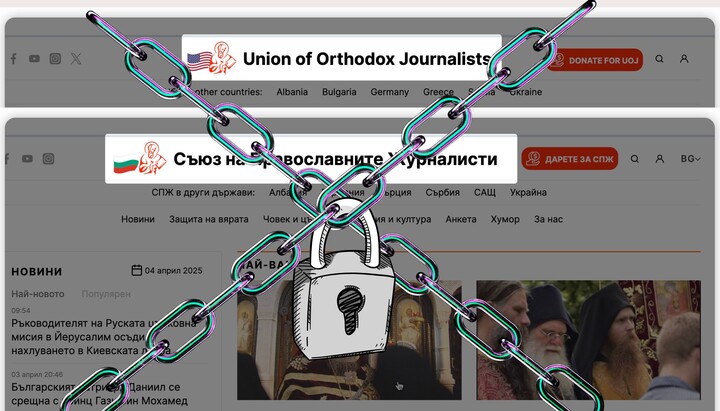
The SBU has blocked Bulgarian and American UOJ websites in Ukraine. Photo: UOJ
That such actions violate freedom of speech is too obvious to even warrant discussion. So let’s focus instead on trying to decipher the logic behind the SBU’s decision.
The UOJ sites in Bulgarian and English are clearly intended for audiences in those countries. They publish news and articles relevant to Orthodox believers in Bulgaria and the United States.
And yet, the Ukrainian government blocks them. Not in Bulgaria. Not in the US (perhaps they’d like to, but they don’t have the tools). No – they block them in Ukraine. For what purpose? Are millions of Ukrainians reading in Bulgarian and English? Clearly not.
And why target these two countries in particular? The UOJ currently operates sites in Germany, Greece, Serbia, and even Mount Athos. Why aren’t those being blocked? What’s the logic here?
Does this move somehow make Ukraine safer? Quite the opposite – it tarnishes the country’s image abroad and deals a serious blow to its reputation. Meanwhile, neither Americans nor Bulgarians are affected by the ban. For them, it’s a non-event.
So what was the point?
When a person is suffering from severe food poisoning – or some other kind of toxic reaction – their movements become erratic, uncoordinated, even desperate. The same thing happens when someone is drowning.
Sadly, we’ve been witnessing a similar lack of control in the state’s actions toward the Ukrainian Orthodox Church for some time now. It’s as if someone in power has chosen the Church and its faithful as an enemy – and is now doing everything possible to harm them, oblivious to the fact that they’re also harming their own country: its unity, its credibility, its moral standing.
Let us hope that, as with any form of intoxication, this will eventually pass. And may it end not in collapse – but in recovery.
Read also
Shoulder straps or a cassock: who writes the script for UOC "fighters"?
Everything indicates that both Veliar and Pshenychny are ordinary performers of someone else's script. There is only one question – does the scriptwriter wear shoulder straps or a cassock?
Why is it legal to kill a person before birth but not after?
Children are the most privileged members of society. Yet that same society officially permits children to be killed – and on a massive scale.
Honoring the Bolsheviks’ successors at Kyiv Lavra
It was under the Reserve that the relics of the saints were desecrated, Lavra churches were turned into an atheism museum, and toilets were installed in sanctuaries.
"Degenerates" and "stupid animals": anti-UOC activists turn on children
Future historians will wonder how a vast country’s information agenda could have been shaped for so long by people so petty, vicious, and utterly contemptible.
Zelensky sees murder of Polish priest but not of Sviatohirsk monk
Why does Zelensky react so emotionally and swiftly to the murder of a Catholic cleric while remaining completely silent about the murder of an Orthodox monk?
UOC vs. OCU numbers: pollsters count, social media recount
Official polling suggests Dumenko’s structure has an overwhelming lead in the number of parishioners, while social media polls paint a very different picture. Which should we believe?