KDAiS professor: Faith in the One Church is not a myth, but a reality
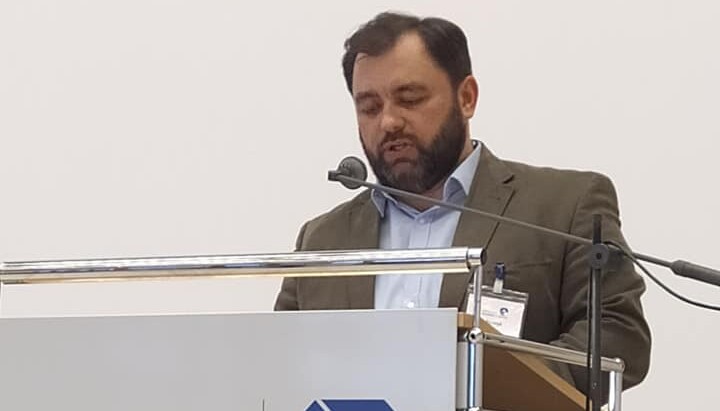
Serhii Bortnyk. Photo: Bortnyk’s Facebook page
On April 9, 2025, Doctor of Theology and professor at the Kyiv Theological Academy and Seminary (KTAAS) Serhii Bortnyk delivered a lecture during the webinar “Myths and Prejudices on the Path to the Unity of Ukrainian Orthodoxy.” His presentation, focused on the current state of the Ukrainian Orthodox Church and challenges in ecclesiastical communication, was published on the website of the Academic Initiative Foundation.
In his address, Bortnyk touched on key theological and practical aspects of the ongoing church crisis in Ukraine.
"The current religious conflict in Ukraine – both at the state-church and interjurisdictional levels – can be described in theological terms of belonging to the true Church of Christ," he noted.
According to Bortnyk, the UOC is currently referred to by many as a “silent Church,” which is often seen as a weakness. However, he argues that this “silence” may have deep theological foundations, drawing a parallel to Christ’s silence before Pilate. “The clearest Gospel illustration of such silence is Christ’s own response to Pilate,” the theologian explained, referring to the episode in which the Savior remained silent in the face of accusations.
"If a person has experienced prayerful elevation, an encounter with truth, and the presence of grace in the Church, it is not easy to convince them that the Church in which they had this experience is hostile to the country and should be banned," Bortnyk emphasized.
He highlighted the importance of understanding the motivations of UOC believers, for whom remaining in their church community has deep existential significance. Many of them, he said, “feel a threat to their Orthodox Christian identity, which they have defended for much of their lives.”
As a way forward, Serhii Bortnyk proposed dialogue – “a dialogue in which each side of the conflict could reflect on its own convictions and those of the opposing side.”
In his view, building such dialogue requires work in two main areas. First, discussing what the Church is and where its boundaries lie – who can be considered members of the Church and who cannot. Second, honestly assessing which aspects of church life come from God, and which are purely human, including political influences.
Earlier, the UOJ reported that in 2024, Serhii Bortnyk gave a presentation at the European Ecumenical Consultation in Warsaw, where he addressed changes in Ukrainian society’s perception of the UOC over the past two years.
Read also
Kyiv’s Vvedensky Monastery damaged in shelling, Two injured
A cluster munition struck the monastery, injuring a cook and a kitchen assistant and damaging the facade, the roof of the monks’ residential building, and several monastic cells.
Medieval сhurch сrumbles as Culture Ministry сites missing agreement
The 14th–15th-century St. Nicholas Church in Chesnyky, Ivano-Frankivsk Region, is falling into disrepair.
Poland сondemns Lviv Regional Council's decision to declare 2007 year of UPA
Polish Prime Minister Donald Tusk says the Lviv Regional Council's decision to dedicate 2027 to the UPA and Roman Shukhevych is harmful to Ukraine.
OCU seeks court recognition of ownership of seized Cherkasy cathedral
The Cherkasy Regional Commercial Court will hear an OCU lawsuit seeking ownership of St. Michael's Cathedral, which was seized from UOC believers.
Lithuanian bishop: Ukraine is no model for believers' rights
Vicar of Vilnius Diocese voices concern over attempts to import Ukraine's religious conflict into Lithuania.
Hundreds of believers honor St. Alexis of Carpatho-Russia in Khust Eparchy
At the St. Nicholas Monastery in the village of Iza-Karputlash, Metropolitan Mark of Khust led a festive liturgy, concelebrated by six metropolitans, five archbishops and three bishops.