Media report on the procedure for electing a new Pope
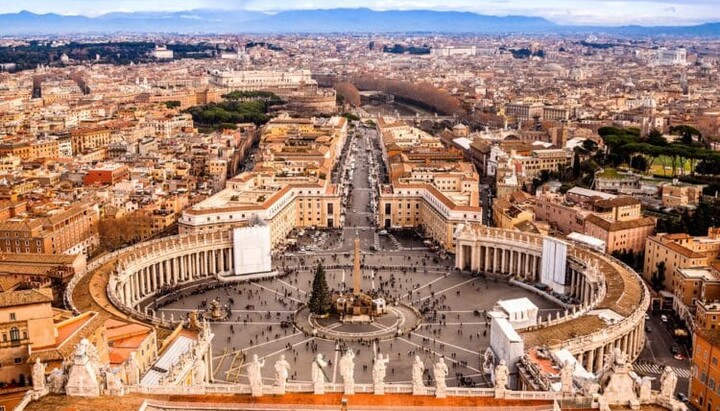
Vatican. Photo: open sources
After the death of the Pope, a strictly regulated procedure begins, known as Sede Vacante – the vacancy of the Apostolic See, reports BBC. First of all, the administrative functions of governing the Vatican are taken over by the Cardinal Camerlengo. He verifies the Pope's death, seals his private apartments, and notifies the members of the College of Cardinals. At this moment, the papal authority is considered officially concluded.
Immediately after the announcement of Sede Vacante, all heads of Vatican departments lose their powers, except for the Camerlengo himself and some technical services. To prevent forgeries, the papal lead seal and the Fisherman's Ring – the personal symbol of the Pope for certifying official documents – are destroyed. From this moment on, documents are signed not in the name of a specific pontiff, but in the name of the Apostolic See.
Four to six days after the death, an official mourning mass is held, followed by the funeral. These events are usually broadcast worldwide. The Pope is typically buried in a tomb located beneath St. Peter's Basilica – in the Vatican grotto.
The election of a new Pope usually begins 15 to 20 days later. A Conclave, a closed assembly of all Cardinals of the Catholic Church who are under 80 years old, is convened. They are placed under conditions of complete isolation: all means of communication, including phones and internet access, are blocked. Meetings and voting take place in the Sistine Chapel. Two votes are held daily, in the morning and in the evening.
The results of the voting are kept secret. The only external sign is the color of the smoke rising from a special chimney above the Sistine Chapel. If a decision is not reached, black smoke is released from the chimney. When the chosen candidate receives the necessary number of votes and gives his consent, white smoke rises into the sky, accompanied by the ringing of Vatican bells.
After this, the newly elected Pope changes into a white papal cassock and steps out onto the central balcony of St. Peter's Basilica. The senior Cardinal who participated in the Conclave pronounces the traditional formula: Habemus Papam, which translates from Latin as: "We have a pope." Then the name of the new Pope is announced, as well as the name he has chosen for his pontificate. Thus, in 2013, Argentine Cardinal Jorge Mario Bergoglio became the first pontiff from South America and chose the name Francis – in honor of Saint Francis of Assisi.
According to canon law, any baptized male Catholic can be elected as pope. However, in practice, he is usually chosen from among the Cardinals. Despite the global nature of the Catholic Church, most pontiffs in history have been from Europe, especially Italy. Of the 266 Popes elected to date, 217 have been Italians.
Earlier, the UOJ reported that Pope Francis broke a 100-year tradition of burial.
Read also
Met. Meletiy consecrates house of worship for UOC community in Dankivtsi
Members of the persecuted UOC Intercession parish in Dankivtsi have converted a house into a place for communal prayer and worship services.
OCU eparchy sells church center site to developer for housing
The OCU’s Volyn Eparchy sold land intended for a spiritual center to a private developer planning to build townhouses and residential buildings.
SBU names UOC priest’s wife a suspect in Cherkasy region
The SBU accused Matushka Kateryna Prykotenko of “spreading enemy propaganda” through correspondence with parishioners.
UGCC cleric calls Russian Orthodox literature dangerous for clergy
While examining the causes of divisions within the UGCC, Yustyn Boiko concluded that Russian Orthodox literature had influenced Greek Catholic clergy.
UOC will play major role in achieving peace, says Vadym Novynskyi
UOC Protodeacon Vadym Novynskyi believes the Church will help bring about reconciliation within Ukrainian society after the war ends.
Catholic media outraged by forcible conscription of Uniate cleric
The Vatican’s Apostolic Nunciature has demanded the return of a forcibly mobilized Greek Catholic cleric.